Dining in the US with severe dietary restrictions isn’t about avoidance; it’s about mastering the local ‘food code’ to unlock authentic and safe culinary adventures.
- Understand portion psychology to prevent overwhelm and manage your meals strategically.
- Use ‘culinary diplomacy’ to communicate your needs clearly and respectfully, turning staff into allies.
Recommendation: Start by learning key phrases and identifying safe side dishes, turning potential minefields into delicious opportunities for discovery.
The thought of a trip to the American South or Midwest conjures images of smoky BBQ, towering burgers, and plates groaning under the weight of fried chicken. For a UK tourist with strict dietary needs—be it vegan, gluten-intolerant, or managing a severe allergy—this dream can quickly curdle into anxiety. Will you be stuck with sad side salads? Will you accidentally offend a well-meaning but unaware diner waitress? The common advice is to “just pack snacks” or “use an app,” but this misses the heart of the issue: you want to experience authentic American culinary culture, not just survive it.
The fear is real, but it’s based on a misunderstanding. The challenge isn’t a lack of options, but a difference in food culture. Success lies not in a long list of “no’s,” but in understanding the unwritten rules of American dining. But what if the key wasn’t simply avoiding problem ingredients, but rather learning a new ‘food code’? This guide is built on that premise. It’s about shifting your mindset from defensive eating to proactive culinary diplomacy. We’ll decode the quirks of American dining, from portion sizes to hidden ingredients, giving you the tools to communicate effectively and confidently.
This isn’t just about finding a safe meal; it’s about reclaiming the joy of travel through food. We will explore how to deconstruct a menu, how to talk to staff in a way that builds bridges, and how to find those hidden gems where you can eat safely, authentically, and affordably. You can and will enjoy the rich tapestry of American cuisine. You just need the right map.
This comprehensive guide provides the strategic framework you need to navigate the US food scene with confidence. Follow along as we break down everything from portion sizes to budget-friendly dining, transforming you from a worried tourist into an empowered food explorer.
Summary: A UK Foodie’s Guide to Safe and Authentic Dining in the US
- Why American Portion Sizes Cause Immediate Digestive Shock for UK Tourists?
- The Hidden Dairy Ingredient That Ruins Southern Comfort Food for Vegans
- Gluten-Free Bread or Lettuce Wraps: Which Alternative Saves Your Burger?
- How to Request Allergen Menus in Traditional US Diners Without Offending Staff?
- When to Book High-End Specialist Allergy Restaurants in Major US Cities?
- The Cotton T-Shirt Mistake That Leads to Severe Heat Rash on Theme Park Days
- How to Find Genuine Southern Comfort Food Hidden in Deep South Neighbourhoods?
- How to Experience Authentic US Culinary Heritage Without Spending £100 per Meal?
Why American Portion Sizes Cause Immediate Digestive Shock for UK Tourists?
Your first meal in a classic American diner can be a culture shock delivered on a platter. What’s considered a standard serving size in the US often dwarfs its European counterpart. It’s not an exaggeration; it’s a measurable phenomenon. In fact, research from The World Data reveals that the average American restaurant meal can reach a staggering 1,495 calories, making it up to 71% larger than a typical portion in France. This isn’t about gluttony; it’s about a cultural expectation of ‘value’. For the unprepared UK visitor, this can lead to immediate digestive distress and unnecessary food waste.
The key isn’t to force yourself to “clean the plate” but to master portion psychology from the moment you sit down. The sheer volume of food can be overwhelming, but with a few strategic moves, you can take control. Think of it not as a challenge, but as an opportunity for two meals in one. This approach not only saves you from discomfort but also helps your travel budget stretch further.
Here are some proven strategies to manage oversized American portions like a seasoned traveler:
- Ask for a “to-go box” (the American term for a takeaway container) as soon as your meal arrives. Before you take a single bite, pack away half of the dish for a later meal.
- Order appetisers or “starters” as your main course. They are often the equivalent of a European-sized main.
- Share large main dishes, known as “entrees” in the US, with your travel companions. This is a common practice and an excellent way to sample more of the menu.
- Don’t be shy about asking for a half-portion or a “lunch-sized” portion, even if you’re dining in the evening. Many kitchens are happy to accommodate.
- Avoid sugary sodas with free refills, which can add hundreds of empty calories. Stick to water or unsweetened iced tea.
The Hidden Dairy Ingredient That Ruins Southern Comfort Food for Vegans
Southern comfort food is a cornerstone of American culinary heritage, but for vegans, it can be a minefield of hidden animal products. The creamy textures and rich flavours you’re craving are often derived from ingredients that aren’t immediately obvious. It’s not just about avoiding cheese or cream; the real challenge lies in ingredients like buttermilk, butter, and bacon grease used as a base for everything from vegetables to bread.
The staff, while often friendly, may not be versed in the nuances of veganism. A question like “Is this vegetarian?” might get a “yes” for a vegetable soup made with chicken broth. This is where your ‘food code’ training becomes essential. You need to ask specific, ingredient-based questions. Instead of asking if something is vegan, ask, “Are the collard greens cooked with bacon grease or fatback?” or “Is there buttermilk in the biscuit batter?” This direct approach avoids confusion and gets you a clear answer.
Your best bet in a traditional Southern restaurant is the “Safe Sides Strategy.” Most “Meat-and-Three” establishments (where you pick one meat and three side dishes) offer a wealth of vegetable options. By learning to identify the typically safe ones, you can build a delicious, authentic, and fully vegan meal. This puts you in control and allows you to participate fully in the local dining experience.
Your vegan survival guide for the South involves looking for these phrases and items:
- Dairy Danger Words: Be wary of terms like ‘creamed’, ‘smothered’, ‘casserole’, and ‘dressing’, as they almost always signal hidden dairy or mayonnaise.
- Safe Sides (with confirmation): Focus on building a plate from items like plain rice, black-eyed peas, roasted sweet potatoes, and corn on the cob. Always confirm they are prepared simply, without butter or meat flavourings.
- Vinegar-Based Slaws: Specifically request a vinegar-based coleslaw instead of the more common creamy, mayonnaise-heavy version.
Gluten-Free Bread or Lettuce Wraps: Which Alternative Saves Your Burger?
No culinary trip to the US is complete without indulging in a great American burger. For the gluten-intolerant traveller, the bun poses the main obstacle. Thankfully, American restaurants have become increasingly aware of this, and you now have several alternatives. The two most common are the dedicated gluten-free (GF) bun and the “protein-style” lettuce wrap. But which one should you choose?
The answer depends on the burger and the restaurant. A lettuce wrap is a universally available, fresh, and light option, perfect for a simple patty. However, it lacks structural integrity and can quickly fall apart with a complex burger loaded with sauces and toppings. A good GF bun, on the other hand, can handle a messier, more elaborate creation and provides a more traditional eating experience. The availability and quality of GF buns vary wildly, with some fast-food chains like Shake Shack offering them consistently, while others require you to ask.
The following table breaks down your main options for a gluten-free burger experience, helping you decide on the fly.
| Option | Structural Integrity | Flavor Impact | Availability |
|---|---|---|---|
| GF Bun | Good for complex burgers | Similar to regular bun | Shake Shack, select locations |
| Lettuce Wrap | Works for simple patties only | Fresh, light taste | In-N-Out, Five Guys |
| Burger Bowl | No structural issues | All flavors preserved | Most restaurants on request |
| Portobello Cap | Excellent hold | Adds umami depth | Many upscale burger joints |
Simply seeing “GF bun” on the menu isn’t enough. Cross-contamination is a serious risk. To ensure your meal is truly safe, especially if you have coeliac disease, you need to ask a few qualifying questions. This isn’t being difficult; it’s being a smart and safe diner.
Your Gluten-Free Safety Checklist: Questions for the Kitchen
- Is your gluten-free bun a specific, trusted brand (e.g., Udi’s)?
- Is the bun toasted on a dedicated gluten-free surface to avoid cross-contamination from regular bread?
- Do the kitchen staff change their gloves when handling gluten-free orders?
- Are the chips (fries) cooked in a dedicated fryer, away from breaded items like onion rings?
- Can I have my burger as a “burger bowl” or on a bed of greens if I’m unsure about the bun?
How to Request Allergen Menus in Traditional US Diners Without Offending Staff?
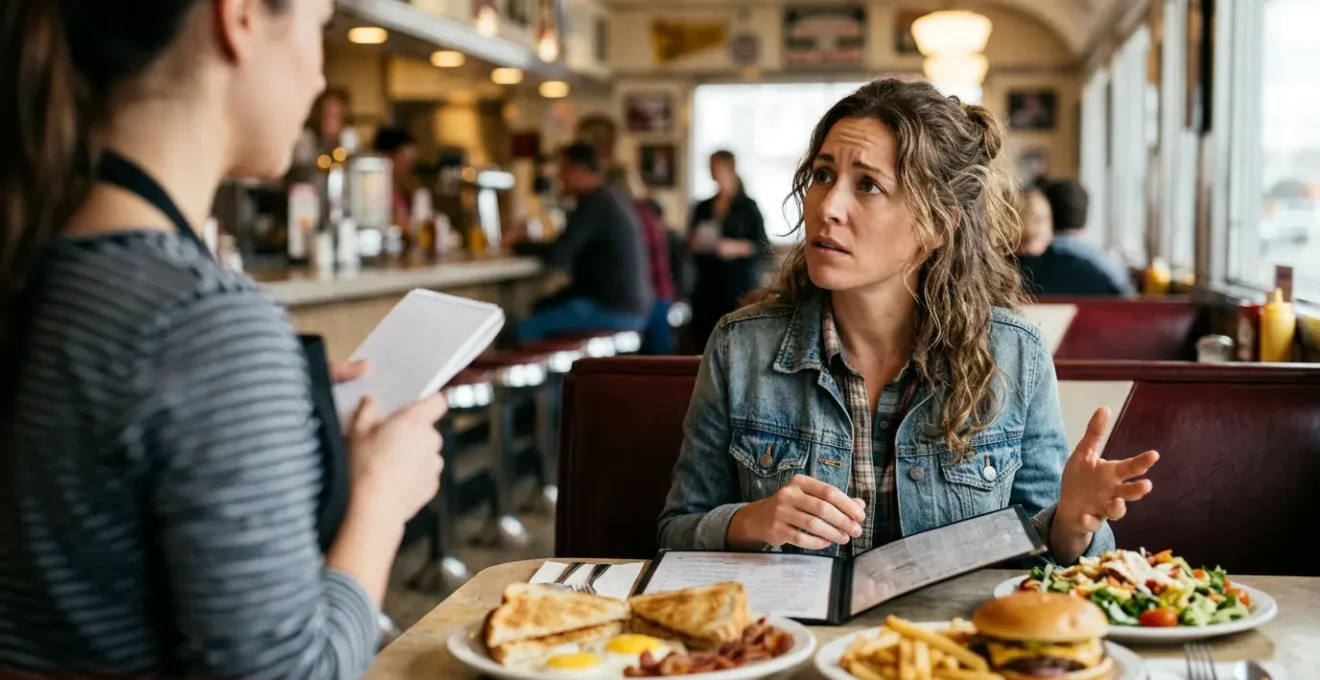
Communicating your dietary needs in a bustling, old-school American diner can feel intimidating. You don’t want to be perceived as a “difficult” customer or offend the staff. This is where we deploy ‘culinary diplomacy’. It’s an approach based on politeness, clear communication, and collaboration. The goal is to make the staff your allies in finding a safe and delicious meal. Instead of leading with a list of what you *can’t* eat, lead with what you *want* to try.
A simple shift in language can make all the difference. As AAA Travel counselor Terri Peña advises, a collaborative opening works wonders:
I would love to try your famous [diner specialty]. I have a [allergy]—is there a way the chef could prepare it for me safely?
– Terri Peña, AAA Travel Tips for Dietary Restrictions
This phrasing shows enthusiasm for their food and frames your request as a shared problem to solve. Timing is also crucial. If possible, call the restaurant during off-peak hours (like 3 PM on a weekday) rather than the 7 PM weekend rush. You’re more likely to get the full, unhurried attention of a manager or chef.
You must also learn to recognize the ‘pre-made’ red flag. If a server tells you, “Everything is pre-made” or “The sauce comes in a big batch,” it’s a polite but firm signal that they cannot safely accommodate modifications. In this case, the wisest move is to thank them and find another restaurant. Pushing the issue will only create frustration and risk your health. True culinary diplomacy involves knowing when to collaborate and when to walk away.
When to Book High-End Specialist Allergy Restaurants in Major US Cities?
While navigating traditional diners is a skill, sometimes you just want the peace of mind that comes with a restaurant that truly understands your needs. Major US cities like New York, Los Angeles, and Austin are hubs for innovative, high-end restaurants that are either fully dedicated to being gluten-free/vegan or have a well-earned reputation for accommodating allergies. The good news is that, on the whole, according to Global Rescue’s travel safety research, the US has a strong level of allergen awareness in its restaurant industry.
Booking these sought-after spots requires a bit of forward planning, especially if they have a Michelin star or a celebrity chef. These aren’t places you can just walk into. A proactive booking strategy is essential. Your reservation is also a critical communication tool. Use the “notes” section on booking platforms like OpenTable, Resy, or Tock to clearly and concisely state your dietary restrictions. This gives the kitchen a heads-up long before you arrive.
Here is a general timeline to follow when booking specialist-friendly restaurants:
- Michelin-starred & Hype Restaurants (NYC, San Francisco): Reservations often open 30-60 days in advance. Be ready to book online the moment they are released.
- Popular Dedicated GF/Vegan Spots (LA, Austin, Portland): Booking 1-2 weeks in advance is usually sufficient for a prime-time table.
- Mid-week Advantage: For a more personalized and less frantic experience, aim for a booking on a Tuesday or Wednesday evening.
- The Follow-up Call: Always call the restaurant on the day of your reservation to politely confirm they received your dietary notes and that the kitchen can accommodate you.
Investing in one or two of these high-end dining experiences can be a relaxing and delicious highlight of your trip, providing a welcome break from the constant vigilance required elsewhere. It’s a way to treat yourself and see the best of what allergy-conscious American cuisine has to offer.
The Cotton T-Shirt Mistake That Leads to Severe Heat Rash on Theme Park Days
While much of your focus will be on food, your physical comfort is just as crucial to enjoying your American adventure, especially during long days in the humid heat of Florida or California theme parks. Many UK visitors make a simple but painful mistake: wearing a standard cotton t-shirt. While cotton feels soft and breathable initially, it’s a terrible choice for hot, sweaty conditions.
The problem with cotton is that it absorbs moisture (sweat) but doesn’t release it effectively. It becomes a damp, heavy layer that clings to your skin, creating the perfect environment for friction and chafing. This can quickly lead to a painful heat rash (prickly heat) that can ruin your day and even the next few days of your holiday. The solution is to think like an athlete and opt for technical fabrics designed for performance in the heat.
Modern fabrics like Merino wool, Tencel, or technical polyester blends are far superior. They are moisture-wicking, meaning they pull sweat away from your skin to the fabric’s surface where it can evaporate quickly. This keeps you drier, cooler, and significantly reduces the risk of chafing. While it may seem counterintuitive to wear wool in the heat, Merino is a natural performance fibre prized for its breathability and odour resistance.
Follow this simple system to prevent heat rash and stay comfortable:
- Choose the Right Fabric: Ditch the cotton and pack shirts made from Merino wool, Tencel/Lyocell, or a polyester blend.
- Apply Anti-Chafing Balm: Before you leave for the park, apply an anti-chafing stick (like Body Glide) to any known friction areas.
- Pack a Spare: A fresh, dry shirt for a midday change can feel incredibly refreshing and is a key part of staying comfortable.
- Take Cooling Breaks: Make a point to step inside an air-conditioned shop, show, or restaurant every couple of hours to give your body a break from the relentless heat.
How to Find Genuine Southern Comfort Food Hidden in Deep South Neighbourhoods?
To truly experience the soul of Southern food, you need to venture beyond the tourist-heavy areas and eat where the locals eat. The most authentic, memorable meals are often found in the most unassuming places. This requires a bit of adventurous spirit and a willingness to look past a restaurant’s polished exterior. Forget TripAdvisor for a moment; your best guide is the local community.
One of the best-kept secrets of the Deep South is the gas station deli. It sounds strange, but many service stations house small kitchens turning out some of the region’s best fried chicken, biscuits, and daily specials. Another key institution is the ‘Meat-and-Three’ cafeteria. These no-frills establishments are the bedrock of everyday Southern dining, offering a rotating menu of meats and a huge variety of vegetable sides—a perfect place to deploy your “Safe Sides Strategy.”
So, how do you spot these hidden gems? The most reliable indicator is the car park. At lunchtime, if you see a car park filled with pickup trucks and work vans, you’ve hit gold. This is the ultimate seal of local approval. Another great strategy is to ask for recommendations from people who are passionate about their local craft: a barista at a third-wave coffee shop, a butcher at a local market, or a brewer at a craft brewery. They are almost always dialed into the local food scene and can point you toward the real deal.
This approach transforms your food journey from a series of reservations into a genuine exploration. It’s about trusting local knowledge over algorithms and discovering the heart of a community through its food. This is where you’ll find the flavours and experiences that stay with you long after your trip is over.
Key Takeaways
- Master Portion Psychology: Control your meal by asking for a to-go box immediately or sharing entrees.
- Practice Culinary Diplomacy: Communicate your needs politely and specifically, turning restaurant staff into allies.
- Employ the Safe Sides Strategy: Build delicious, authentic meals from vegetable side dishes in traditional Southern restaurants.
How to Experience Authentic US Culinary Heritage Without Spending £100 per Meal?
Experiencing authentic American food doesn’t have to drain your travel fund. While the US is home to many world-class, expensive restaurants, its culinary heritage is equally, if not more, present in its budget-friendly and casual dining options. With a few smart strategies, you can eat incredibly well and authentically for a fraction of the cost of fine dining.
One of the best resources for affordable, high-quality regional food is the hot bar at high-end supermarkets like Whole Foods or Wegmans. These stores employ chefs who prepare a vast array of dishes, from regional specialities to globally inspired cuisine, all sold by weight. You can build a custom plate of exactly what you want to try—safely—for under $15 (£12).
Another classic American strategy is to take advantage of happy hour. Typically running from 4-6 PM on weekdays, many restaurants and bars offer significant discounts on drinks and a special menu of their signature appetisers and small plates. This is a fantastic way to sample a restaurant’s best dishes without committing to a full, pricey dinner. Food trucks are also a vital part of the modern American food scene, offering innovative and authentic regional cuisine for under $20 (£16). Look for food truck parks or gatherings to sample a wide variety in one place.
Finally, don’t forget the power of the strategies we’ve already discussed. Sharing large specialty items like a Chicago deep-dish pizza or a Texas BBQ platter is not only a great way to manage portion sizes but also to split the cost. And if your accommodation has a kitchen, visiting a local farmers’ market to pick up regional ingredients can be a culinary adventure in itself.
With this new ‘food code’ in hand, you’re no longer just a tourist with dietary needs; you’re a savvy culinary explorer ready for an American adventure. Your journey can be filled with delicious, authentic, and safe experiences. The next step is to start planning your first meal with confidence.