Travel to the United States
Embarking on a journey to the United States requires meticulous preparation, whether you are planning a scenic coastal holiday or taking the monumental step of relocating for a new career. The sheer scale of the country means that logistical challenges—from navigating strict federal borders to managing cross-state travel budgets—can quickly overwhelm unprepared travellers. Understanding the intricacies of US entry requirements and local infrastructure is the fundamental difference between a seamless experience and a stressful ordeal.
This comprehensive resource breaks down the essential pillars of travelling to and settling in the US. By exploring crucial immigration protocols, strict customs regulations, road trip economics, and strategic relocation planning, you will gain the insights needed to navigate the American landscape with confidence and avoid the common pitfalls that frequently ensnare international visitors.
Mastering US Border Control and Immigration Procedures
Clearing US Customs and Border Protection (CBP) is often the most anxiety-inducing part of transatlantic travel. The key to a smooth entry lies in understanding the process and arriving prepared. Think of the immigration hall not as a simple checkpoint, but as a formal interview where clarity and consistency are your best assets.
Choosing the Right Entry Method
Upon arriving at a major US international airport, travellers face the immediate decision of how to process their entry. E-Passport gates have significantly altered passenger flow, but they are not a universal solution for everyone.
- E-Passport Gates: Ideal for returning visitors travelling on an ESTA. They scan your biometric data quickly, drastically reducing the time spent queuing.
- Manual Desks: Mandatory for first-time ESTA users, visa holders, or anyone who receives an error receipt from the automated kiosks.
Managing Border Questions and Digital Privacy
When standing before a border agent, confidence is paramount. The questions asked—typically regarding your itinerary, accommodation, and return flights—are designed to verify the legitimacy of your visit. Over-explaining or offering unsolicited information often triggers unnecessary secondary questioning. Answer directly, concisely, and truthfully.
A critical, yet often overlooked, aspect of modern border control is digital privacy. Agents possess the authority to request access to your smartphone or laptop. Refusing to unlock your device, or having a phone that triggers suspicion due to inappropriate messages or illegal content, can lead to immediate denial of entry. Ensure your devices are fully charged and free of any material that could misrepresent your intentions.
Beating the Immigration Hall Queues
Timing your arrival at the immigration hall can save you from the dreaded three-hour queue. Disembarking the aircraft efficiently and walking briskly to the hall before the rest of your flight—and other arriving flights—makes a substantial difference. Utilising restroom facilities on the aircraft shortly before landing, rather than stopping in the terminal, is a simple but highly effective strategy.
Navigating Strict US Federal Customs Regulations
Once through immigration, you must navigate federal customs. The US enforces some of the strictest biosecurity and financial regulations globally. Ignorance of these laws is never accepted as a valid defence, and mistakes can result in heavy fines, confiscation of goods, or detainment.
Prescription Medication and Restricted Painkillers
Medication that is available over-the-counter in Europe may be strictly classified as a controlled substance in the United States. A common mistake involves bringing specific painkillers containing codeine. To navigate these regulations safely:
- Leave all medication in its original, clearly labelled packaging.
- Carry a formal copy of your prescription or a doctor’s letter.
- Only bring a quantity that is reasonably required for the duration of your stay.
Declaring Food, Gifts and High-Value Electronics
The rules surrounding agricultural products are inflexible. Failing to declare certain everyday snacks, particularly those containing meat extracts or fresh fruit, results in immediate territory entry fines. When in doubt, always declare the item; an agent will simply confiscate it without penalty if it is prohibited, whereas hiding it incurs severe financial consequences.
Regarding high-value items, travellers must pack strategically. High-end electronics, such as laptops and expensive cameras, should always remain in your hand baggage. Checked luggage is subject to rough handling and routine TSA searches, increasing the risk of damage or theft.
Financial Declarations and Cash Seizures
The US imposes a strict declaration threshold for currency. If you are carrying more than $10,000 in cash, or its equivalent in foreign currency, you must declare it. Crucially, this limit applies to families travelling together, not just individuals. Failing to complete the FinCEN 105 form prior to customs clearance often results in the immediate seizure of the entire sum.
Planning a Pacific Coast Road Trip on a Budget
The legendary Pacific Coast drive is a dream for many, but without strategic planning, it can quickly deplete a strict family budget. From navigating rental agreements to optimising routes, financial foresight is essential.
Car Hire Traps and Campervan Insurance
Renting a vehicle in states like California involves navigating complex insurance landscapes. Approximately 80% of international drivers fall into the car hire trap at the rental desk, where high-pressure sales tactics push unnecessary Collision Damage Waiver (CDW) or Supplemental Liability Insurance (SLI). To avoid paying double, secure an independent, comprehensive excess insurance policy before departing your home country.
For those opting for a campervan, thoroughly review the terms for hidden fees regarding mileage limits, generator usage, and cleaning costs. Renting slightly inland rather than directly at coastal airports can also yield significant savings.
Route Selection and Fuel Optimisation
Choosing between scenic routes and major highways dictates both the pace and the cost of your journey. Highway 1 offers unparalleled coastal views but requires slow, winding driving that consumes more fuel and time. Conversely, Interstate 5 provides a rapid, direct corridor through the state but sacrifices the iconic scenery.
To cut fuel costs, avoid refuelling at remote coastal stations or directly next to national park entrances. Utilising fuel-finding applications to locate stations slightly off the main tourist routes can reduce fuel expenses by up to 30% over a two-week holiday.
Strategic Accommodation Booking
Booking accommodation along the Pacific shore at the last minute is a guaranteed way to destroy your holiday budget. Coastal motels and hotels operate on dynamic pricing, capitalising on spontaneous travellers. Securing reservations months in advance, or opting for lodgings a few miles inland from premium spots like Big Sur or Santa Barbara, ensures affordable rates and guaranteed availability.
Relocating to US Innovation Hubs for Tech Professionals
For expatriates moving to the US for career advancement, the landscape of innovation hubs is shifting rapidly. The traditional dream of relocating to established giants is increasingly being challenged by emerging tech cities offering superior lifestyles.
Evaluating Emerging Tech Cities
While Silicon Valley remains historically significant, relocating there is no longer the definitive career move it once was. Astronomical living costs and intense competition have driven many professionals toward emerging innovation hubs like Austin, Texas, and Raleigh, North Carolina. These cities offer robust job markets, vibrant tech communities, and significantly lower state taxes, making them highly attractive alternatives for international professionals.
Cost of Living and Housing Realities
The most common miscalculation that ruins expats in US tech cities is misunderstanding the true cost of living. A high six-figure salary can evaporate quickly when factored against state income taxes, exorbitant healthcare premiums, and local property taxes. For example, finding affordable housing in the Bay Area often necessitates a punishing daily commute of up to three hours. When evaluating a move, prioritising regions where housing costs align realistically with localized salaries is crucial for maintaining a high quality of life.
Negotiating Relocation Packages
Before accepting a position and moving across the Atlantic, negotiating a comprehensive relocation package is imperative. Do not assume standard provisions cover all hidden costs. Ensure your package explicitly addresses temporary housing, shipping of household goods, visa sponsorship fees, and potentially even tax equalisation consultations. Negotiating these terms before signing the contract provides the financial buffer necessary to settle into your new American life smoothly.

Which US Innovation Hub Offers the Best Quality of Life for British Expats?
The highest-paying US tech job offer doesn’t guarantee the best quality of life; it often masks a reality of extreme living costs and cultural burnout. Silicon Valley’s prestige is offset by crippling housing costs, making emerging hubs like Austin and…
Lire la suite
How to Navigate US Federal Customs Regulations When Carrying Prescription Medication?
For British travellers with chronic health conditions, the fear of having NHS prescriptions confiscated by US Customs is a significant source of anxiety. The solution is not just to carry a doctor’s note, but to shift your mindset. This guide…
Lire la suite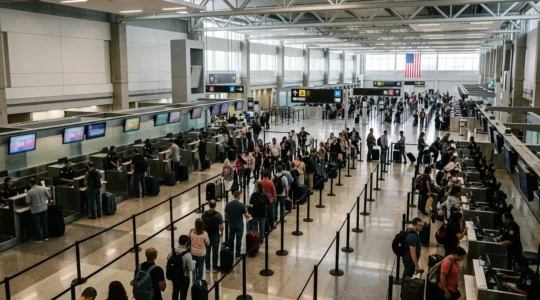
How to Clear US Territory Entry Smoothly Without Unnecessary Secondary Questioning?
In summary: Adopt a « procedural mindset »: US border control is a checklist, not an interrogation. Clear, concise answers are key. Control your signals: Prepare your digital devices and physical belongings to present a consistent, low-risk profile. Declare with precision: Understand…
Lire la suite
How to Manage a Two-Week Pacific Shores Holiday on a Strict UK Family Budget?
In summary: Your biggest budget risk isn’t flights, but a series of avoidable « tourist taxes » on car hire, insurance, and accommodation. Pre-booking specific items from the UK and buying others upon arrival in the US can save you hundreds of…
Lire la suite