Transportation & Mobility
Travelling across a landmass as vast as the United States requires considerably more than just a valid passport and a general itinerary; it demands a highly strategic approach to transportation and mobility. For international visitors, particularly British tourists accustomed to tightly integrated European infrastructure, the American transit landscape can initially appear fragmented and daunting. From coordinating multi-state adventures to simply getting from an airport terminal to a downtown hotel without facing exorbitant fees, understanding the mechanics of regional travel is absolutely essential.
The sheer scale of the North American continent dictates that applying a one-size-fits-all approach to logistics rarely succeeds. A method perfectly suited for navigating a dense eastern seaboard metropolis might prove entirely unviable in a sprawling southern urban centre. By familiarising oneself with the nuances of domestic aviation, rail networks, ride-sharing dynamics, and private vehicle hire, travellers can systematically avoid common logistical pitfalls. This comprehensive overview breaks down the intricacies of moving efficiently, safely, and economically, transforming potentially stressful journeys into seamless transatlantic adventures.
Mastering Interstate Travel Across the United States
Covering the vast distances between American states requires a fundamental shift in perspective. Unlike traversing the relatively compact nations of Europe, moving between US regions often involves crossing time zones and entirely different climates, necessitating careful selection of your primary mode of transport.
Evaluating Domestic Flights, Trains, and Coaches
When planning a comprehensive thirty-day US adventure, coordinating long-haul segments is usually the first major hurdle. It is highly recommended to treat the American domestic flight network as the primary artery for distances exceeding five hundred miles. To secure internal US flights under £150, travellers must understand the domestic booking windows, which differ significantly from transatlantic patterns. Purchasing tickets too early or too late often results in paying premium corporate rates.
For those travelling on a stricter backpacker budget, the debate between the Amtrak train network and Greyhound coach services is a classic dilemma. Each offers distinct advantages and drawbacks:
- Amtrak Train Services: Offers significantly more legroom, dining cars, and scenic routes. However, outside the Northeast Corridor, services can be infrequent and subject to freight rail delays.
- Greyhound and Megabus Coaches: Generally provide the most economical interstate transit. They offer vast network coverage reaching smaller towns, though the comfort level for journeys exceeding ten hours can test even the hardiest of travellers.
The Hidden Complexities of Interstate Driving
The great American road trip is a legendary concept, but attempting to drive across five states in a single week almost universally ends in severe driver burnout. The monotonous stretches of interstate highways require immense concentration, and the distances are frequently underestimated by international visitors.
Furthermore, hiring a vehicle comes with strict bureaucratic stipulations. A frequent and costly error is the state border crossing mistake that inadvertently voids many UK rental car agreements. Countless tourists assume that, much like the Schengen Area, crossing from New York to New Jersey or California to Nevada carries no restrictions. However, failing to notify the rental agency of interstate travel can invalidate insurance coverage instantly, leaving drivers financially vulnerable in the event of an incident.
Navigating Major American Aviation Hubs
American mega-airports function essentially as independent, self-contained cities. Mastering their internal transit systems and border control procedures is crucial for avoiding missed connections and ruined itineraries.
Conquering Megahubs Like Chicago O’Hare
Surviving a short layover at a massive facility like Chicago O’Hare requires precise execution. A common terminal transfer mistake that strands international travellers involves underestimating the physical distance between concourses. When clearing border control at O’Hare, knowing exactly when and where to recheck your luggage is a critical step that dictates whether you make your connecting domestic flight.
To navigate these hubs effectively, one must utilise the Automatic Transit System to move swiftly between the busiest concourses. During severe winter storm delays, knowing how to bypass massive security queues—often through strategically chosen checkpoints or pre-clearance programmes—can save hours. If you find yourself facing a lengthy delay, you must weigh the options of paying for an exclusive airport lounge versus settling for concourse dining during a three-hour wait.
Streamlining Arrivals at Miami International
Southern hubs present their own unique challenges, particularly during peak Florida holiday seasons. Escaping Miami International Airport quickly requires knowing exactly where to locate reliable ground transportation without being subjected to heavily inflated tourist pricing.
Exhausted British tourists frequently fall prey to the unlicensed taxi trap, a costly mistake that can easily add over £100 to the start of a holiday. When deciding between the Metrorail system and a ride-share application to reach destinations like South Beach, one must factor in the time of day and luggage volume. Furthermore, scheduling your return flight strategically is vital to avoid the terrible Miami airport rush hours, which can double travel times on the surrounding expressways.
Urban Mobility: Moving Safely Through American Metropolises
Once you have reached your destination city, the challenge shifts from covering vast distances to navigating dense, highly populated urban grids. Understanding the local transit hierarchy is paramount for personal safety and budget preservation.
Decoding Public Transit Systems
Relying exclusively on American public buses can sometimes lead to severe delays due to heavy reliance on mixed-traffic lanes rather than dedicated transit corridors. While underground systems offer speed, using subterranean transit networks safely during peak commuter hours requires vigilance and an understanding of local etiquette.
When budgeting for urban exploration, tourists must choose between multi-day transit passes and pay-as-you-go systems. Multi-day passes frequently offer the best value in cities with highly integrated networks, whereas pay-as-you-go might be preferable in metropolises where you will mostly rely on walking or private vehicles.
Ride-Sharing and Official Taxis
After midnight, the calculation regarding which urban transportation options keep tourists safest changes dramatically. The late-night subway mistake—boarding empty carriages or travelling to unfamiliar outer boroughs—puts unwary visitors in highly vulnerable positions. When public transit ceases to be the safest option, knowing when to abandon it and pay the premium for a private transfer is a crucial judgment call.
The debate between hailing official city taxis versus utilising ride-sharing applications heavily depends on the specific city. However, regardless of the platform, identifying fake Uber drivers circling busy American entertainment districts is an essential safety skill. Always verify the license plate, the driver’s name, and the destination before entering any vehicle.
The Financial Pitfalls of Urban Car Hire
Many tourists wrongly assume that a private vehicle is necessary for city exploration. In reality, hiring a car in incredibly dense environments like New York City or downtown Chicago is often the ultimate financial disappointment. The combination of dense traffic, aggressive local driving styles, and extortionate parking fees quickly turns a convenience into a liability.
Moreover, acquiring the vehicle itself can be deeply frustrating; renting a car directly at the airport terminal often takes hours longer than anticipated due to understaffed kiosks and extensive queues. Once at the accommodation, visitors frequently encounter the dreaded hotel parking trap, a mandatory valet or garage fee that secretly adds upwards of £50 to the nightly bill, completely obliterating any perceived savings.
Embracing Micro-Mobility for Short Commutes
For navigating the final mile of a journey, modern American cities are increasingly adopting micro-mobility solutions. Combining traditional walking paths with electric scooters or shared bicycles frequently results in the fastest possible commute across downtown districts.
To safely utilise these options, riders must strictly adhere to local ordinances, which often prohibit riding on pavements and require the use of designated cycle lanes. Integrating these modern tools with established transit networks allows visitors to experience the vibrant street-level culture of a city while maintaining highly efficient travel times.
Mastering transportation and mobility within the United States requires a blend of advanced planning, situational awareness, and a willingness to adapt to regional infrastructure. By understanding the distinct roles of domestic flights, long-haul trains, airport transit systems, and urban mobility networks, international travellers can confidently navigate the complexities of the American landscape. Delving into the specific logistics of each transport method ensures that your time is spent enjoying the destination, rather than wrestling with the journey.
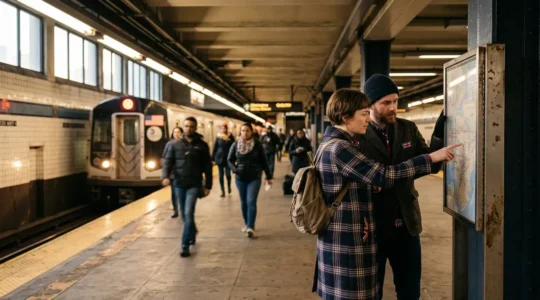
US Urban Transit for UK Visitors: A Security Expert’s Threat Assessment Guide
Contrary to popular belief, there is no single « safest » way to travel in American cities; the key is to abandon a fixed mindset and adopt a dynamic threat assessment model. Public transit reliability is not guaranteed, creating situational risks that…
Lire la suite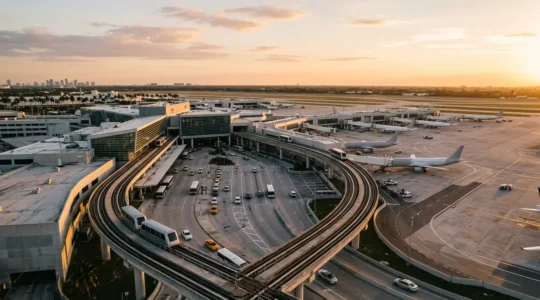
How to Escape Miami International Airport Quickly (and Safely) During Peak Florida Holiday Seasons
In summary: The fastest way out is often not the most obvious; use the free MIA Mover train to exit the terminal’s high-surcharge zone before calling a rideshare. Never accept a ride from someone soliciting in the terminal. Always use…
Lire la suite
How to Survive a 90-Minute Layover at Chicago O’Hare and Not Miss Your Flight
Successfully navigating a tight O’Hare connection is not about speed, but about outsmarting the airport’s three critical choke points: immigration, baggage re-check, and terminal transfers. Your 90-minute layover is actually closer to 20 minutes of discretionary time once fixed delays…
Lire la suite
How to Plan a Seamless Journey Through Multiple US States Without Exhaustion?
Planning an epic American road trip from the UK often fails because we treat US states like European countries. The key to a seamless journey isn’t a packed itinerary, but mastering the ‘friction of scale’—the hidden logistical traps, costs, and…
Lire la suite