In summary:
- Adopt a “procedural mindset”: US border control is a checklist, not an interrogation. Clear, concise answers are key.
- Control your signals: Prepare your digital devices and physical belongings to present a consistent, low-risk profile.
- Declare with precision: Understand that common British snacks and over-the-counter medications can be prohibited. When in doubt, declare it.
- Know the system’s logic: Understanding why rules exist (e.g., arrival queues, biometrics) turns anxiety into a strategic advantage.
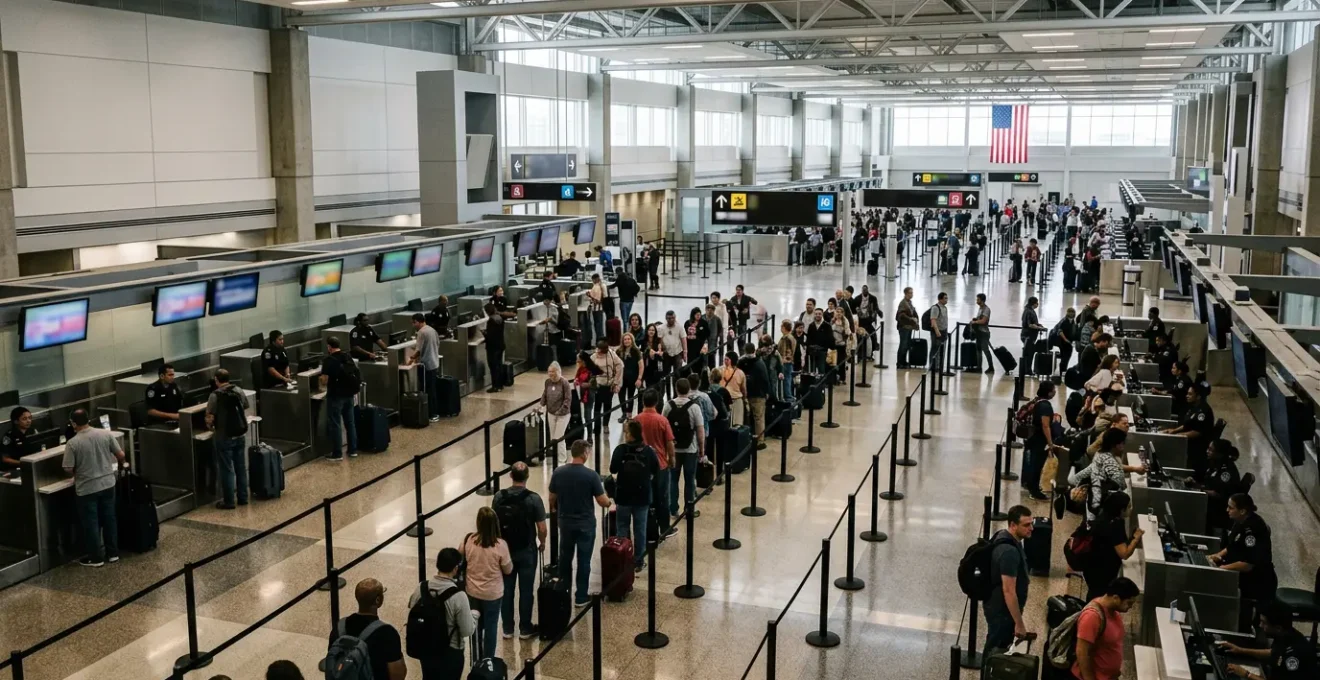
The feeling is familiar for any first-time UK traveller to the United States: a knot in the stomach as the line for Customs and Border Protection (CBP) shuffles forward. You’ve heard the stories of stern officers, three-hour queues, and confusing questions. The common advice to “just be honest” or “don’t be nervous” is well-intentioned but utterly unhelpful when your heart is pounding.
Most guides focus on having your documents ready, but they miss the crucial underlying point. Clearing US immigration isn’t a test of your character; it’s an exercise in passing a rapid-fire risk assessment. The officers are trained to look for inconsistencies—the tiny signals that deviate from the norm. These are the “friction points” that can turn a two-minute chat into a two-hour ordeal in a secondary screening room.
But what if the key wasn’t to manage your anxiety, but to understand the system’s logic so thoroughly that anxiety becomes irrelevant? This guide moves beyond platitudes. As a former airline ground staff member, I’ve seen countless travellers make the same preventable mistakes. The secret to a smooth entry is adopting a procedural mindset. It’s about learning to control the signals you send—from your answers to the snacks in your hand luggage—to align perfectly with what the system is designed to process efficiently.
This article will provide a clear, step-by-step strategy to navigate the most common friction points for British travellers. We will break down how to answer questions, manage your digital privacy, choose the right queue, and avoid costly mistakes with medication and food, transforming you from an anxious tourist into a prepared and confident visitor.
Summary: Your Step-by-Step Guide to a Stress-Free US Border Crossing
- How to Answer US Border Control Questions Confidently Without Raising Red Flags?
- The Smartphone Error That Triggers Immediate Phone Searches at US Border Control
- E-Passport Gates or Manual Desks: Which US Entry Method is Faster for Brits?
- Why Bringing Certain British Snacks Causes Immediate Territory Entry Fines?
- When to Arrive at the Immigration Hall to Beat the Dreaded Three-Hour Queue?
- The Painkiller Mistake That Can Get UK Citizens Detained by US Customs
- Why Glasses and Heavy Makeup Can Trigger Annoying Biometric Screening Failures?
- How to Navigate US Federal Customs Regulations When Carrying Prescription Medication?
How to Answer US Border Control Questions Confidently Without Raising Red Flags?
The verbal exchange with a CBP officer is the first and most critical test of your “procedural mindset.” They are not looking for a life story; they are looking for clear, consistent, and verifiable information that matches your documentation. The scale is immense; the DHS confirms it processes more than a million travelers each day, so brevity and clarity are paramount. Vague, rambling, or overly casual answers are immediate red flags because they force the officer to dig deeper.
The goal is to provide just enough information to satisfy the question, and no more. Think of your answers as data points for their checklist. Instead of “I’m here to travel around and see some friends,” which is vague, a better answer is, “Tourism for two weeks, staying primarily in New York City.” This provides purpose, duration, and location in one concise sentence.
Crucially, avoid British understatement. An officer might ask, “What is the purpose of your visit?” Replying with “Just a bit of a holiday” can be misinterpreted as evasive. A direct, American-style response like “Tourism” or “Attending a business conference” is always better. You must master this form of signal control to present yourself as a low-risk, easy-to-process traveller.
To structure your responses, use a simple framework. For every question, ensure your answer is precise, plausible, and aligns perfectly with your ESTA application and return ticket. This proactive compliance demonstrates you understand the process and have nothing to hide.
The Smartphone Error That Triggers Immediate Phone Searches at US Border Control
In the modern travel era, your smartphone is a significant potential “friction point.” Many travellers mistakenly believe their digital life is entirely private at the border. However, US Customs and Border Protection asserts broad authority to search electronic devices of anyone entering the country. While you can refuse to provide a passcode, this can lead to your device being confiscated for a forensic search, causing significant delays and stress. The key is not to fight this authority, but to prepare for it.
The most common error is having your phone unlocked and actively logged into sensitive apps (email, social media, banking) as you approach the desk. An unlocked, active device is an open invitation for a cursory look if an officer has any reason to be suspicious. The goal is to create a digital barrier that respects their authority while protecting your privacy as much as possible.
Your strategy should be one of digital readiness. Before you even join the immigration queue, power down your devices completely. This forces anyone who wants to access them to request that you power them on and unlock them, a deliberate process that is less likely to happen without cause. Furthermore, ensure critical travel documents are available offline. A screenshot of your hotel confirmation, ESTA approval, and return flight in an offline folder means you never need to say, “It’s in my email, can I get on the Wi-Fi?”—a phrase that immediately raises digital security flags.
Your Digital Readiness Plan for US Entry
- Power Down: Turn off your phone and laptop completely before entering the immigration hall. This creates a necessary barrier to casual inspection.
- Log Out & Secure: Log out of sensitive apps. Use long, alphanumeric passcodes for your devices and ensure your laptop’s drive is encrypted (BitLocker for Windows, FileVault for macOS).
- Offline Documents: Create a dedicated folder on your phone with screenshots of your ESTA approval, hotel booking confirmations, and return flight details.
- Review Cloud Access: Be aware that while officers cannot compel access to live cloud data, anything downloaded to your device is considered to be on the device. Clean up unnecessary downloaded files.
- Commit to Memory: Do not write your passwords down. Commit them to memory to avoid creating an additional security risk.
E-Passport Gates or Manual Desks: Which US Entry Method is Faster for Brits?
Upon entering the immigration hall, you’re often faced with a choice: the sleek, automated e-passport gates (APC kiosks) or the traditional queue for a manual desk with a CBP officer. The temptation is to assume technology is always faster, but this is a classic “friction point” where the wrong choice can cost you time. There is no universally “faster” option; the right choice depends on your specific circumstances.
The automated gates are designed for speed and efficiency but are unforgiving. They are best suited for frequent, solo UK travellers who have entered the US before under the ESTA program and have a high degree of tech confidence. However, they can be problematic for first-time visitors, as any minor issue—a biometric mismatch, a slightly damaged passport chip—results in a “referral ticket,” sending you to the back of the manual queue, a frustrating double delay.
For families, groups, or anyone with even a slight anxiety about the process, the manual desk is almost always the safer bet. While the queue may appear longer, it keeps your group together and guarantees you interact with a human who can process you as a single unit. CBP’s own data on airport wait times confirms that flight arrival patterns can vary considerably, meaning a long queue can move faster than you think, especially outside the peak 3pm-7pm arrival window for transatlantic flights.
The following table provides a clear decision matrix to help you choose the path of least resistance based on your travel profile.
| Factor | E-Passport Gates | Manual Desks |
|---|---|---|
| First-Time Visitors | Risk of technical failure or referral | Guaranteed human assistance and processing |
| Family/Group Travel | May separate group members, causing confusion | Keeps entire group together for processing |
| Peak Hours (3pm-7pm) | Potentially faster if all goes well | Longer but more predictable and reliable wait |
| Physical Passport Stamp | No physical stamp is provided | Entry stamp is received (proof of legal entry) |
| Tech Confidence Required | High (must follow on-screen prompts correctly) | None |
Why Bringing Certain British Snacks Causes Immediate Territory Entry Fines?
From years of observing travellers, one of the most surprising and costly mistakes involves the innocent-looking snacks packed from home. The declaration card asks about “food,” and many UK travellers tick “no,” thinking of a bag of crisps, not a prohibited agricultural product. This is a critical error. The US has extremely strict rules, not because they dislike British food, but to prevent the introduction of foreign animal diseases.
The core issue is that many beloved British products contain hidden meat or dairy derivatives that are not obvious. A pork pie is clearly meat, but what about Bovril or meat-flavoured gravy granules? They contain beef extract and are prohibited. Even some versions of Percy Pigs contain pork-derived gelatin, making them technically inadmissible. The “system logic” here is absolute: if it contains meat or certain dairy products from a country with known livestock diseases (like foot-and-mouth, which the UK has had), it’s not coming in.
Failing to declare these items is not a minor oversight. According to the CBP, it can lead to fines and penalties of up to $10,000. The rule of proactive compliance is simple: when in doubt, declare it. Ticking “yes” to food and telling the officer you have “some biscuits and a packet of crisps” is a zero-risk scenario. At worst, they will confiscate the item. At best, they will wave you through for your honesty. The following items are common culprits:
- Pork pies and Scotch eggs: Contain meat products and are strictly prohibited.
- Bovril and meat-based gravy granules: Contain beef extract, which is a banned meat product.
- Many flavoured crisps: Always check the ingredients for meat-derived flavourings (e.g., “bacon flavour”).
- Percy Pigs (and other sweets with gelatin): Versions containing pork or beef gelatin are technically restricted.
- Clotted Cream: Fresh dairy products are often restricted; it’s safer to avoid bringing them.
When to Arrive at the Immigration Hall to Beat the Dreaded Three-Hour Queue?
The infamous three-hour immigration queue is not a myth, but it’s also not an inevitability. It’s a product of airport logistics and flight scheduling. The key to beating it isn’t luck; it’s understanding the “system logic” of passenger flow. Most major US airports experience a massive wave of international arrivals from Europe between 3 PM and 7 PM local time. If your flight lands in the middle of this rush, you are guaranteed a long wait.
Your first strategic move happens when booking your flight. If possible, opt for a flight that lands in the morning (before 11 AM) or later in the evening (after 8 PM). These off-peak times see significantly lighter traffic from long-haul flights. Even an hour can make a difference. However, you can’t always control your landing time. Your next opportunity for “signal control” is on the aircraft itself.
As soon as the seatbelt sign turns off, your goal is to deplane as quickly as is politely possible. This is not the time for leisurely gathering your belongings. Having your carry-on ready to go and positioning yourself near the aisle can put you ahead of 100-200 other passengers. That translates to 100-200 people *not* in front of you in the queue. This may sound trivial, but in a system processing thousands, being at the front of your flight’s wave rather than the back can easily save you 30-60 minutes. It’s a small action that demonstrates a proactive, prepared mindset.
The Painkiller Mistake That Can Get UK Citizens Detained by US Customs
Of all the potential friction points, undeclared or prohibited medications are the most serious. While section 8 covers general prescription rules, a specific warning for UK travellers is needed for over-the-counter painkillers. What is perfectly legal and commonplace in the UK can be a controlled substance in the US, and ignorance of the law is not a defence.
The number one offender is Co-codamol. Because it contains codeine, it is classified as a Schedule II controlled substance in the US. Bringing it into the country without a valid US prescription is illegal and can lead to detention, confiscation, and severe penalties. Many UK travellers pack it without a second thought, creating a high-stakes problem from a simple headache remedy.
The same caution applies to other common cold and flu remedies or sleep aids. Products containing ingredients like pseudoephedrine may be restricted in quantity or require documentation. The U.S. Department of State offers a stark warning that every traveller should heed.
Even some over-the-counter medications are illegal in some countries.
– U.S. Department of State, Customs and Import Restrictions Guide
The only safe approach is one of proactive compliance: leave all codeine-based UK painkillers at home. Purchase what you need, like Tylenol (paracetamol) or Advil (ibuprofen), after you arrive. For any other medication, check the active ingredients against the U.S. Drug Enforcement Administration’s list of controlled substances before you pack.
Why Glasses and Heavy Makeup Can Trigger Annoying Biometric Screening Failures?
Biometric screening is an increasingly common part of the US entry process, whether at an automated kiosk or a manual desk where your photo and fingerprints are taken. It’s another part of the system’s logic designed for efficiency, but it can become a “friction point” if your physical appearance interferes with the technology. The system isn’t judging your look; it’s trying to match the data points of your face and fingerprints to your passport file.
The most common cause of a facial recognition failure is glasses. The glare from the lenses, or the frames obscuring the shape of your eyes, can prevent the software from making a confident match. Even if you wear glasses for vision, you must be prepared to remove them for the photo. The second common issue is heavy makeup, particularly strong contouring. Makeup that significantly alters the perceived shape of your nose, cheekbones, or jawline can confuse the algorithm, which is mapped to your natural facial topology.
Fingerprint scanners can also be surprisingly finicky. Dry skin, common after a long flight, can make it difficult for the scanner to get a clear read of your prints. A simple proactive step is to apply hand lotion about an hour before landing to ensure your skin is hydrated. These small preparations show you understand the requirements of the system.
To ensure you pass the biometric check on the first try, follow these simple success tips:
- Remove all eyewear (glasses and sunglasses) before you step up to the camera.
- Keep your hair pulled back away from your face and forehead.
- Maintain a neutral facial expression, similar to your passport photo (no big smiles).
- If you wear makeup, aim for a natural look and avoid heavy contouring on the day of travel.
- Apply hand lotion before landing to improve the quality of your fingerprint scan.
Key Takeaways
- Communication is Procedural: Answer border control questions using the “3P” framework: state your Purpose, Place, and Period clearly and concisely.
- Preparation is Paramount: Secure your digital devices and pre-pack medications and snacks with a full understanding of US regulations to avoid fines and delays.
- Declaration is Your Safety Net: The single most important rule is to declare any item you are unsure about. Honesty leads to confiscation at worst; non-declaration can lead to severe penalties.
How to Navigate US Federal Customs Regulations When Carrying Prescription Medication?
Beyond the specific issue of UK painkillers, navigating US customs with any prescription medication requires a strategy of absolute transparency and proactive compliance. The CBP and the Food and Drug Administration (FDA) are primarily concerned with two things: preventing the import of unapproved or fraudulent drugs and stopping the illegal trafficking of controlled substances. Your job is to provide irrefutable proof that your medication is for a legitimate, personal medical condition.
Never, under any circumstances, should you carry pills in a weekly organiser or an unmarked bottle. This is the biggest red flag you can wave. All medication must be kept in its original pharmacy-labelled packaging, which clearly shows your name, the doctor’s name, the medication name, and the dosage. This is non-negotiable.
The second pillar of your strategy is a detailed doctor’s letter. This letter, written on official letterhead, should list your medical condition and all the medications you are carrying to treat it, including their generic and brand names, and dosages. Finally, only carry a reasonable personal supply. For a two-week trip, a 30-day supply is considered reasonable. A 6-month supply is not and will raise questions about intent to distribute.
The U.S. Food and Drug Administration prohibits the importation, by mail or in person, of fraudulent or counterfeit drugs and medical devices. These include unorthodox ‘cures’ for medical conditions such as cancer, AIDS, arthritis, or multiple sclerosis.
– U.S. Food and Drug Administration, CBP Prohibited and Restricted Items Guide
This “holy trinity” of documentation—original packaging, a doctor’s letter, and a reasonable supply—creates an unimpeachable record of legitimacy. Always pack these items in your carry-on luggage, never in your checked bags, in case your luggage is lost or you need to present them to an officer.
With this procedural mindset, you are now equipped with a clear strategy. The final step is to put this knowledge into practice, ensuring every part of your preparation aligns with presenting yourself as the low-risk, well-informed traveller that you are.
Frequently Asked Questions About UK to US Entry
Is Co-codamol allowed in the US?
No. Co-codamol contains codeine, which is a Schedule II controlled substance in the US and illegal to possess without a valid US prescription. Bringing UK over-the-counter Co-codamol into the US can lead to serious penalties.
What happens if I’m caught with undeclared controlled medications?
You may face detention for questioning, significant fines, confiscation of the medication, and in serious cases, potential criminal charges depending on the substance and the quantity you are carrying.
Can I bring UK sleep aids and cold medicines?
You must check the ingredients very carefully. Common UK cold medicines containing pseudoephedrine may be restricted in quantity. Strong prescription sedatives require the full documentation (original packaging, doctor’s letter) and must be declared.