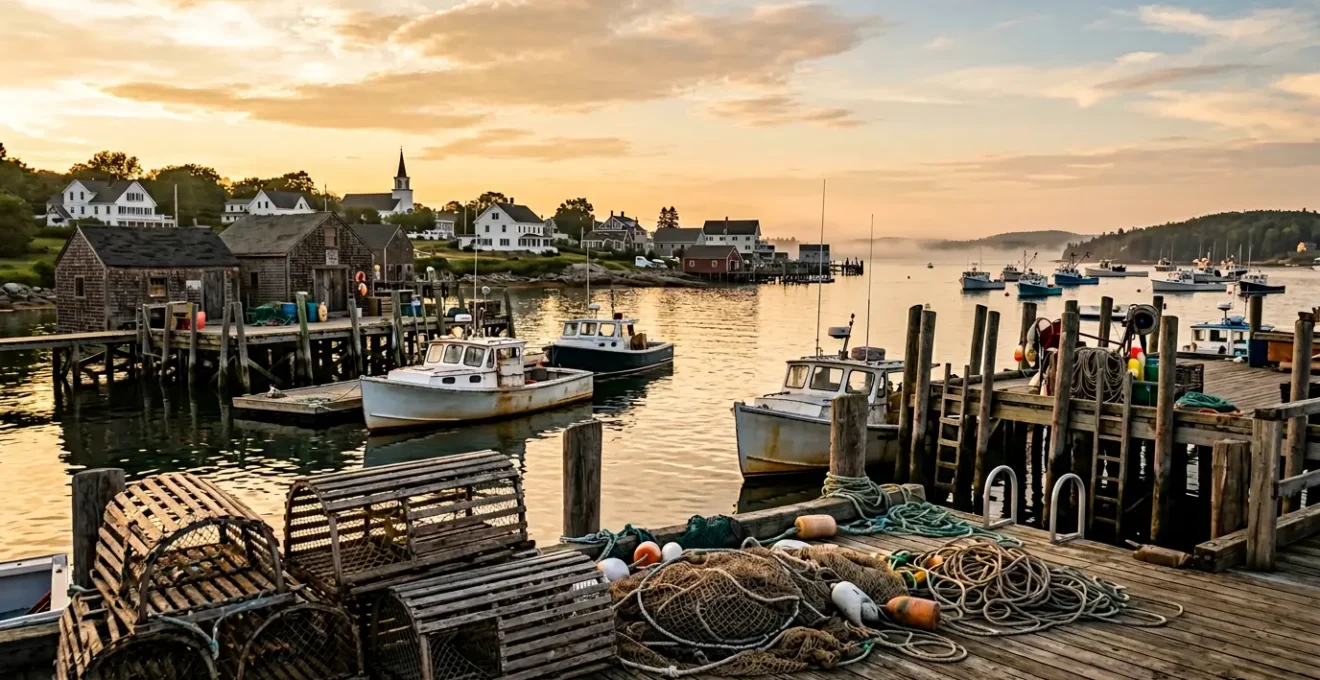
The secret to affordable New England seafood isn’t finding cheaper restaurants; it’s learning to bypass the tourist supply chain entirely.
- Market fluctuations and multiple middlemen can double or triple the price of lobster between the boat and your plate.
- Authentic, high-value seafood is found by buying directly from fishermen, understanding dish-to-dish value, and knowing when to visit.
Recommendation: Adopt a “local’s mindset” by focusing on dockside economics and the “one-block-inland” rule to cut your seafood spending by over 50%.
The vision is perfect: a family holiday on the US East Coast, culminating in a fresh Maine lobster dinner by the sea. Then reality hits. You see the menu and the “Market Price” next to the lobster roll is a staggering $45—nearly £40. Suddenly, that dream meal feels more like a budget-destroying nightmare. This price shock is a common experience for UK families travelling through New England, forcing many to settle for lesser options or skip the iconic seafood experience altogether.
Most travel guides offer the same generic advice: find a “lobster shack” or look for lunch specials. Whilst not wrong, this advice barely scratches the surface. It keeps you within the same tourist-centric ecosystem where prices are inflated for convenience and waterfront views. You might save a few dollars, but you’re still paying a premium. This approach fails to address the fundamental reason for the high cost: the long supply chain between the fisherman and your fork.
But what if the key wasn’t finding a cheaper restaurant, but learning to think like a local and bypass that system? This guide offers a different strategy. It’s about understanding the supply chain bypass—a set of principles that allow you to access premium, fresh-off-the-boat seafood at prices closer to what locals pay. We’ll dismantle the menu scams, calculate the true value of each dish, and show you exactly how to buy directly from the source.
This journey will take you through the hidden economics of the seafood industry, from the docks of Maine to the kitchens of traditional diners. By mastering these insider secrets, you can transform your seafood dining from an expensive splurge into an affordable, authentic, and memorable part of your East Coast road trip.
Contents: Your Guide to Affordable New England Seafood
- Why Market Price Fluctuations Can Double Your Restaurant Bill Overnight?
- The “Fresh Catch” Menu Scam That Feeds Tourists Frozen Imported Prawns
- Lobster Roll or Clam Chowder: Which Dish Offers Better Value for Money?
- How to Buy Live Seafood Directly from Maine Fishermen Off the Docks?
- When to Visit Coastal Shacks to Get the Best Off-Season Lobster Prices?
- Maine Coast or Florida Keys: Which Atlantic Route Suits Your Two-Week Holiday?
- How to Request Allergen Menus in Traditional US Diners Without Offending Staff?
- How to Plan an East Coast US Road Trip Without Falling for Expensive Tourist Traps?
Why Market Price Fluctuations Can Double Your Restaurant Bill Overnight?
That dreaded “Market Price” on the menu isn’t just a suggestion; it’s a direct reflection of a volatile and complex supply chain. The price of a lobster isn’t static. It changes daily based on weather, fuel costs, seasonal demand, and total catch volume. For instance, whilst current Maine lobster prices at retail markets fluctuate between $10 to $14 per pound, this is far from the whole story. The biggest price jump happens after the lobster leaves the boat.
The journey from the ocean to your plate involves several middlemen. A fisherman sells to a dealer, who sells to a distributor, who then sells to the restaurant. Each of these steps adds a significant markup. A striking example from Massachusetts shows how fishermen might receive $5.50 per pound from a dealer, but by the time that same lobster is prepared and served, it has transformed into a $35-$45 restaurant lobster roll. This is the core of the problem: you are not just paying for the seafood, but for multiple layers of profit and logistics.
To navigate this, you need to understand dockside economics. For example, a “soft-shell” lobster, which has recently moulted, contains less meat than a “hard-shell” of the same weight, yet they are often sold at similar prices in restaurants. A local knows to ask for hard-shells for better value. Similarly, asking for “culls” or “pistols”—lobsters that have lost one or both claws during harvesting—can get you the same delicious tail meat for a fraction of the cost, as they are considered “imperfect” by the market.
Finally, timing is everything. Demand skyrockets on weekends, pushing prices up. Visiting a seafood market mid-week, especially on a Tuesday or Wednesday, often yields lower prices as demand subsides. By understanding these market forces, you can begin to work around the system instead of being a victim of it.
The “Fresh Catch” Menu Scam That Feeds Tourists Frozen Imported Prawns
The term “Fresh Catch of the Day” evokes images of a fisherman hauling his prize straight to the restaurant kitchen. The reality can be far less romantic. Seafood fraud is a widespread issue where cheaper, often frozen and imported, species are substituted for more expensive local varieties. That “local cod” could be previously frozen haddock, and those “fresh” prawns might have travelled thousands of miles. The key to avoiding these scams is to become a “freshness detective” and learn to spot the signs.
Your first tool is curiosity. Ask specific questions. Instead of “What’s the fish?”, ask for its scientific name or origin. Retailers are required by law to provide Country of Origin Labeling (COOL) information, and a hesitant answer is a major red flag. Another visual clue is in the texture of the fish. This is particularly evident in salmon, where the difference between wild-caught and farmed is stark.
As the image above illustrates, wild salmon has a deep, uniform colour with fat integrated into the muscle. Farmed salmon, by contrast, often displays prominent white fat stripes, giving it a zebra-like appearance. This is a tell-tale sign that what you’re being sold as “wild Atlantic salmon” may not be what it seems. To arm yourself against these common deceptions, use a systematic approach to verify what’s on your plate.
Your Action Plan: The Freshness Detective Checklist
- Ask for the scientific name of the fish; generic terms like ‘rockfish’ can hide substitutions.
- Look for the zebra-like white fat stripes in salmon; wild salmon has integrated fat, while farmed has distinct stripes.
- Request Country of Origin Labeling (COOL) information, which retailers are legally required to provide.
- Be wary of unusually low prices; if a deal on premium fish seems too good to be true, it likely is.
- Check if seafood is labeled as “previously frozen”, especially for out-of-season fish advertised as “fresh”.
Lobster Roll or Clam Chowder: Which Dish Offers Better Value for Money?
When you’re on a budget, every menu choice matters. Two New England staples, the lobster roll and clam chowder, seem like obvious choices, but they offer vastly different value propositions. A lobster roll is an icon, but its high price is often for the experience as much as the food. Clam chowder is more wallet-friendly, but the amount of actual seafood can be minimal. The secret to making the right choice is to think in terms of “value-per-ounce”—how much actual meat are you getting for every dollar spent?
A typical lobster roll contains about 4-6 ounces of meat but can cost upwards of $35. In contrast, a bucket of steamed clams (“steamers”) might offer double the meat for a lower price. This makes steamers one of the highest-value items on any seafood shack menu. You can also apply the “spoon test” to chowder: a truly good, hearty chowder should be thick enough for a spoon to almost stand up in it. If it’s thin and watery, you’re paying for cream and potatoes, not clams.
Another insider tip relates to the style of lobster roll. The cold, mayonnaise-based “Maine-style” roll is classic, but the fillers can disguise a smaller amount of meat. The warm, butter-drenched “Connecticut-style” roll is often a purer and more substantial serving of lobster meat. To make an informed decision, it’s helpful to see a direct comparison of the cost and content of popular dishes.
| Dish | Average Price | Meat Content | Cost per Ounce | Value Rating |
|---|---|---|---|---|
| Lobster Roll (6oz) | $32-45 | 4-6oz meat | $7.50/oz | Medium |
| Whole Lobster (1.5lb) | $45 | 6oz meat | $7.50/oz | High (experience) |
| Clam Chowder | $12-15 | 2-3oz clams | $5.00/oz | Medium-High |
| Steamer Bucket | $25-30 | 8-10oz meat | $3.00/oz | Highest |
How to Buy Live Seafood Directly from Maine Fishermen Off the Docks?
The ultimate strategy for affordable, high-quality seafood is the supply chain bypass: buying directly from the fishermen as they unload their catch. This is where you’ll find the freshest lobster at the absolute best price, completely cutting out the multiple layers of middlemen. However, this isn’t like walking into a supermarket. It requires knowing the local customs and etiquette. Showing up with a credit card and trying to haggle will get you nowhere. This is a cash-based, respect-driven transaction.
First, you need to find them. Don’t rely on Google Maps. Look for small, handwritten signs on coastal roads or at the ends of local piers. The key is to visit during landing hours, which are typically in the early morning or late afternoon. Bring your own cooler with ice to transport your purchase safely, and have cash ready in small bills. The correct way to ask about price is, “What’s the price per pound for hardshells today?” This signals that you are an informed buyer, not just a curious tourist.
For families who find the prospect of direct dockside negotiation intimidating, there’s an excellent alternative: fishermen’s co-ops. These cooperatives, like Cape Ann Fresh Catch, provide a more structured retail experience while maintaining the direct-from-source benefit. They allow consumers to get affordable, sustainable, and high-quality seafood with set hours, consistent pricing, and the convenience of credit card payments. This option removes the guesswork while still delivering a far better price and product than any restaurant.
Whether you choose the dock or a co-op, you’re engaging in a more authentic and rewarding way to enjoy seafood. You’ll not only save a significant amount of money but also connect directly with the community that powers the local fishing industry.
When to Visit Coastal Shacks to Get the Best Off-Season Lobster Prices?
While buying direct is the cheapest method, sometimes the convenience of a prepared meal at a classic seafood shack is what your holiday calls for. Even here, timing can drastically impact your bill. The peak tourist season of July and August brings the highest prices, driven by overwhelming demand. The secret to finding value is to target the “shoulder seasons”: late May to early June, and September to early October.
During these periods, the weather is still pleasant, but the crowds have thinned out, forcing shacks to offer more competitive pricing. The price difference is not trivial. Historically, lobster prices at the dock ranged from $3-5 per pound in the 2010s, but now often exceed $6. This increase is passed directly to you, the consumer, and is most pronounced during peak season. Visiting just a few weeks before or after the summer rush can save you 20-30% on your meal.
Another micro-strategy involves weather patterns. Keep an eye on the local forecast. After a string of three or more calm, sunny days, fishermen can go out more frequently. This often leads to a temporary surplus of lobster, causing prices to dip for a day or two. A shack’s operating schedule can also be a clue. Those open only from Memorial Day (late May) to Labor Day (early September) are geared entirely towards tourists, with pricing to match. Year-round establishments often have more reasonable, locally-oriented prices.
Finally, look for end-of-season specials. Many shacks close for the winter around Columbus Day (the second Monday in October). In their final week of operation, they often run clearance specials to sell off their remaining inventory. This can be one of the best times of the year to find a bargain on a lobster roll or a full lobster dinner.
Maine Coast or Florida Keys: Which Atlantic Route Suits Your Two-Week Holiday?
For a UK family planning a two-week Atlantic road trip, the choice often comes down to two iconic routes: the rugged, historic coastline of Maine or the sun-drenched, tropical chain of the Florida Keys. Both offer incredible seafood, but the experience, cost, and culture are worlds apart. Your choice should align with your family’s budget, atmosphere preference, and what type of seafood you’re most excited to try.
The Maine coast is defined by its rustic, no-frills charm. The best seafood is found in BYOB (Bring Your Own Bottle) shacks where the focus is entirely on the food. The peak season for lobster is July through October. This route is ideal for families who love the outdoors and appreciate a quieter, more authentic atmosphere. The budget-friendly options revolve around DIY lobster boils with seafood bought from a market or co-op. However, recent supply issues, like how Maine’s 2023 lobster catch was the lowest since 2009, make timing your visit during peak landing season even more crucial for affordability.
The Florida Keys, on the other hand, offer a vibrant, party-like atmosphere. The prime seafood here is the famous stone crab, with a peak season from October to May. While delicious, the Keys can be significantly more expensive. The culture revolves around tiki bars and restaurants with high-priced drinks that can quickly inflate a meal’s cost. Budget options exist, such as happy hour oysters and smoked fish dip, but the overall cost of dining and accommodation is generally higher than in Maine.
To decide which route is best for your family, a side-by-side comparison of the key factors is essential. This helps clarify the trade-offs between the two destinations in terms of both cost and experience.
| Factor | Maine Coast | Florida Keys |
|---|---|---|
| Peak Season | July-October (lobster) | October-May (stone crab) |
| Budget Options | BYOB shacks, DIY lobster boils | Happy hour oysters, tiki bars |
| Price Range | $10-14/lb lobster retail | Variable stone crab market price |
| Atmosphere | Rustic, no-frills, lower cost | Party vibe, higher drink prices |
| Secondary Options | Fried haddock, clam strips | Smoked fish dip, conch fritters |
How to Request Allergen Menus in Traditional US Diners Without Offending Staff?
Navigating food allergies can be stressful, especially in the informal setting of a traditional New England seafood shack where corporate-style allergen menus are non-existent. The key to getting the information you need without causing friction is to be polite, specific, and understanding. Staff in these small, often family-run businesses are usually busy and may not be trained in formal allergen protocols, but they are often willing to help if approached correctly.
Instead of a broad question like “What’s gluten-free?”, which can be overwhelming, ask a direct, simple question about a specific ingredient. For example, “Is there any flour in your clam chowder?” is much easier to answer. The biggest risk in most shacks is the shared fryer. Many places fry their chips, clams, and fish in the same oil, creating a major risk of cross-contamination for those with shellfish or gluten allergies. Leading with this concern is a good strategy: “I have a shellfish allergy. Could you tell me if the chips are fried in the same oil as the clams?”
Timing your communication can also make a huge difference. Calling the shack during an off-peak hour, like 3 PM, will give you a much better chance of speaking with a knowledgeable and un-rushed staff member. For those with severe allergies, the safest dishes are often the simplest: steamed lobster or grilled fish have far fewer hidden ingredients than chowders, stuffies, or battered items. And remember, a little kindness goes a long way. Thanking the staff for their extra attention and tipping accordingly acknowledges their effort.
- Use specific questions: Ask “Is there dairy in the chowder?” rather than “What can I eat with a dairy allergy?”
- Inquire about the fryer: The shared fryer is the number one source of cross-contamination. Make it your first question.
- Call ahead during off-peak hours: Staff will be more relaxed and able to answer questions thoroughly between lunch and dinner rushes.
- Stick to simple dishes: Steamed or grilled items are always a safer bet than complex sauces or battered foods.
- Show your appreciation: A sincere thank you and a good tip for the extra service fosters goodwill and ensures careful handling of your order.
Key takeaways
- The high price of restaurant seafood is due to multiple markups in the supply chain, not just the cost of the lobster itself.
- You can get better value by calculating the “cost per ounce” of meat in a dish, with steamers and mussels often being the best buys.
- Bypassing restaurants to buy directly from fishermen or co-ops is the single most effective way to access fresh seafood at a fair price.
How to Plan an East Coast US Road Trip Without Falling for Expensive Tourist Traps?
A successful, budget-friendly road trip is built on a foundation of local knowledge. Tourist traps thrive on convenience and prime locations, charging a premium for both. The good news is they are easy to avoid if you know what to look for. The most powerful tool in your arsenal is the “One-Block-Inland” rule. Restaurants with pristine waterfront views often have the highest prices and most mediocre food, as they cater to a constant stream of one-time visitors. The best value is almost always found one or two streets away from the main tourist thoroughfare.
Another pro tip is to follow the locals. At lunchtime, look for where the contractor’s vans and fishing trucks are parked. These workers know where to find authentic, well-priced food. Also, actively seek out BYOB (Bring Your Own Bottle) establishments. Restaurant alcohol markups are enormous, and bringing your own wine or beer can cut your total meal cost by 30-50%. This allows you to splurge a little more on the food itself.
Thinking outside the restaurant box is also key. Buy freshly cooked lobster meat from a seafood market and a loaf of bread from a local bakery. This creates an incredibly high-quality picnic for a fraction of a restaurant lobster roll’s cost. An excellent example of an establishment that has defied tourist-trap pricing for decades is Markey’s Lobster Pool in New Hampshire. Since 1971, they have proven that it’s possible to serve affordable, quality seafood. At Markey’s, you can find one-pound lobsters for as little as $10 and clam chowder for under $4, demonstrating that value and quality can coexist.
These strategies aren’t about being cheap; they’re about being smart. They allow you to experience the authentic culinary landscape of New England, enjoying better food for less money, just as a local would. By adopting this mindset, you can protect your holiday budget while enriching your travel experience.
Frequently Asked Questions About New England Seafood
Do authentic seafood shacks have formal allergen menus?
Most traditional shacks don’t have corporate allergen menus. Your best strategy is direct communication with the staff about specific ingredients in the dishes you’re interested in.
What are the main allergen risks in seafood shacks?
Shared fryers are the primary concern, as most shacks fry multiple items like fish, clams, and chips (fries) in the same oil, which can cause significant cross-contamination.
Which dishes are safest for allergen concerns?
Simple, whole items like steamed lobster or grilled fish have fewer hidden ingredients and are generally safer than chowders, stuffed dishes, or anything that is battered and fried.