The secret to finding authentic American food isn’t in 5-star reviews; it’s in understanding the cultural codes that locals use.
- Authenticity is often signalled by what seems inconvenient: early sell-out times, basic decor, and even mediocre online reviews from locals.
- The most memorable meals are found in unexpected places, from gas station delis in the South to pizzerias focusing on a single, regional style.
Recommendation: Stop looking for polished tourist signs and start looking for signs of a thriving local community: work trucks in the car park, handwritten menus, and queues forming before noon.
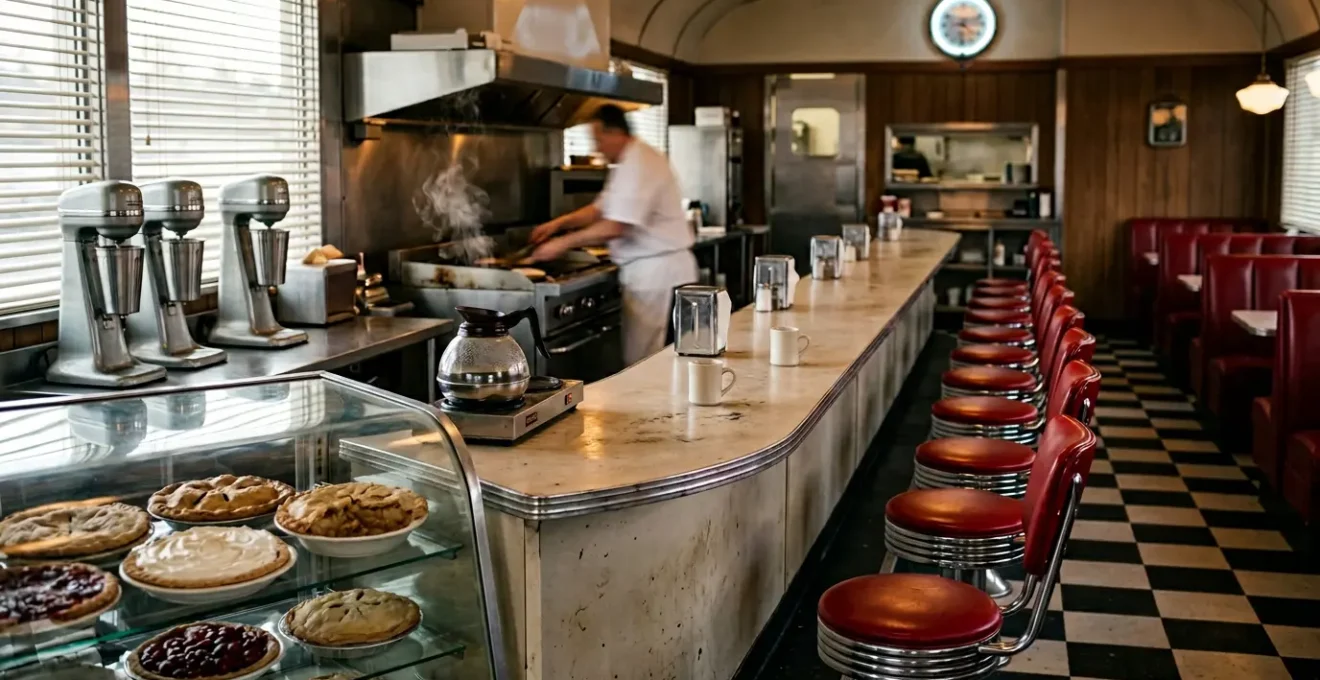
For most Brits, American food is a landscape shaped by television: glistening burgers, towering milkshakes, and neon-lit diners. It’s an image of abundance, certainly, but one that barely scratches the surface. When you, a discerning foodie, land on US soil, the desire is for something more profound. You’re not just looking for a meal; you’re hunting for heritage, for the real flavour of a region that a chain restaurant could never replicate. Yet, the path is fraught with peril.
The common advice to “check online reviews” or “find a local diner” often leads you straight into the arms of a carefully curated tourist experience—decent, perhaps, but ultimately hollow and overpriced. You end up with a £100 bill for a meal that feels more like a performance of authenticity than the genuine article. It’s a common frustration that leaves you wondering where the *real* America eats.
But what if the key wasn’t about finding better restaurants, but about learning to see the ones that are hiding in plain sight? The truth is, authentic American culinary heritage isn’t advertised with flashy signs or perfect Google ratings. It operates on a different set of cultural codes. This guide is your Rosetta Stone. It will teach you to ignore the tourist bait and instead spot the subtle, often counter-intuitive signals that lead to genuine, unforgettable, and refreshingly affordable American food experiences.
This guide will equip you with the insider knowledge needed to navigate the vast and varied American food scene. From decoding pizza styles to understanding the unspoken rules of BBQ joints and tipping, you’ll learn to eat not like a tourist, but like a savvy local.
Summary: Your Guide to Uncovering America’s True Culinary Heart
- Deep Dish or New York Slice: Which Historic Pizza Must You Try First?
- Why Following Online Reviews for US Heritage Restaurants Often Leads to Disappointment?
- When to Arrive at Traditional Texas BBQ Joints to Avoid the Sold-Out Signs?
- The Tipping Etiquette Error That Offends American Servers and Costs You Extra
- How to Find Genuine Southern Comfort Food Hidden in Deep South Neighbourhoods?
- The Cotton T-Shirt Mistake That Leads to Severe Heat Rash on Theme Park Days
- The Hidden Dairy Ingredient That Ruins Southern Comfort Food for Vegans
- How to Navigate Heavy US Culinary Specialties with Strict Dietary Restrictions?
Deep Dish or New York Slice: Which Historic Pizza Must You Try First?
The great American pizza debate, as presented to tourists, is almost always a binary choice: Chicago’s hefty deep-dish or New York’s foldable slice. While both are historic, focusing only on them is like visiting London and debating only fish and chips or a roast dinner. It misses the point. The savvy food explorer knows that America’s pizza landscape is a patchwork of fiercely defended regional styles, and that’s where true authenticity lies. In fact, a significant portion of the population, with the average American eating 180 slices per year, has an opinion on the matter.
The real discovery comes when you look beyond the two titans. Consider the emergence of Detroit-style pizza, a thick, rectangular pie with a caramelised, cheesy crust that has become a national obsession. A recent analysis found that U.S. regional pizza styles like Detroit’s are now desired by 34% of consumers, proving there’s a growing appetite for genuine food stories beyond the tourist trail. Have you heard of the New Haven ‘apizza’ from Connecticut, with its charred, crisp crust, or the Provel-topped, cracker-thin St. Louis style? These are the conversations locals are having.
Finding these gems requires a shift in mindset. You must ignore the tourist-oriented parlours with their encyclopaedic menus and souvenir T-shirts. Look for the small, spartan shops with minimal decor, a short menu, and a steady stream of locals. A true sign of confidence is a pizzeria that masters one thing. When in doubt, order a simple cheese or pepperoni slice. If the fundamentals are good, they have nothing to hide. This is the first step in learning to see past the marketing and taste the real history.
Why Following Online Reviews for US Heritage Restaurants Often Leads to Disappointment?
In the digital age, our first instinct when hungry in a new city is to pull out our phones and consult the oracle of Google Maps or Yelp. We scroll, looking for that magic 4.5-star rating and glowing reviews. In America, following this strategy for heritage food is one of the fastest routes to disappointment. The places that cater to tourists are masters of managing online reputations, whereas the true local gems are often blissfully, and revealingly, ignorant of them.
The secret lies in learning to read between the lines of the reviews you do find. A five-star review gushing about a restaurant being “right next to our hotel” is a massive red flag. Conversely, a detailed three-star review from a local complaining that the “greens were a bit too salty today” or “the queue was too long” is pure gold. It tells you this is a place with regulars, with standards, and with a history. As one travel food expert wisely noted:
Three-star reviews from locals often give average ratings to beloved spots for minor flaws, which are goldmines for authenticity seekers.
– Travel food expert, TravelAwaits Food Tours Guide
The digital breadcrumbs are a good start, but your own eyes are the ultimate arbiter of authenticity. A restaurant with menus in five languages is a tourist business, not a culinary institution. A place with a tour bus parked outside is serving busloads, not a community. The most authentic spots often have handwritten menu boards, no professional food photos, and a car park full of work trucks, not rental cars. This table helps distinguish the tourist traps from the local treasures.
| Tourist Trap Signs | Authentic Local Spots |
|---|---|
| Multiple language menus | Single handwritten menu board |
| Perfectly staged food photos | No professional photography |
| Reviews mention ‘close to hotel’ | Reviews discuss specific dishes |
| Tour buses parked outside | Work trucks and local vehicles |
| Extensive souvenir section | Focus purely on food |
When to Arrive at Traditional Texas BBQ Joints to Avoid the Sold-Out Signs?
Nowhere is the disconnect between tourist expectation and local reality more stark than in the world of traditional American barbecue. You may have seen the queues on a food show, but the crucial detail often missed is the timing. Unlike a typical restaurant that serves from noon till night, a true Texas BBQ joint operates on a principle that is baffling to many outsiders: they cook a set amount of meat, and when it’s gone, it’s gone. The “Sold Out” sign is not a marketing gimmick; it’s a fundamental part of the business model, and a powerful signal of quality.
This “sell-out culture” is the ultimate proof of freshness. The pitmaster has been working since before dawn, tending to the smokers to ensure the brisket is perfectly rendered and the ribs are fall-off-the-bone tender. The goal is to sell every last piece of that day’s labour of love. Analysis of these establishments shows a clear pattern: on weekends, the most popular items like brisket can be gone by noon, with the entire place selling out by 2 PM. This isn’t just a Texas thing; the same principle applies to the best bakeries, doughnut shops, and daily-special delis across the country. Scarcity is a byproduct of excellence.
So, when should you arrive? The short answer is: much earlier than you think. For the legendary spots, arriving for lunch at 1 PM is a fool’s errand. You’re not just queuing for food; you’re participating in a ritual. Locals know the rhythm, and now you will too. For weekend visits, aim to be in line by 10:30 AM. On a weekday, you might get away with 11:30 AM. It’s an early lunch, for sure, but the reward is a taste of barbecue so good it will redefine the genre for you.
Your Action Plan: BBQ Timing Strategy
- Arrive by 10:30 AM on weekends, or 11:30 AM on weekdays, to ensure the best selection of meats.
- Check the restaurant’s Instagram stories on the morning of your visit; many post real-time updates on queue length and what’s available.
- Look for “good queues” filled with locals and workers in their trucks, not large tourist groups with cameras.
- For large groups or if you want a whole brisket, call ahead; many places allow pre-orders, letting you bypass the longest waits.
- Plan your visit for a Tuesday, Wednesday, or Thursday for the shortest queues and the freshest batches of the week.
The Tipping Etiquette Error That Offends American Servers and Costs You Extra
There is no single topic that causes more anxiety for British travellers in the US than tipping. Back home, it’s a discretionary bonus for exceptional service. In the United States, it is a fundamental, non-negotiable part of the server’s wage. Getting this wrong is not just a social faux pas; it can be seen as deeply disrespectful. The confusion is understandable, but navigating it is essential for a smooth dining experience.
The core of the issue is the American wage structure for service staff. In many states, servers are paid a “tipped minimum wage” which is significantly lower than the standard minimum wage, with the expectation that tips will make up the difference. Your tip isn’t a gift; it’s their income. So, what is the correct amount? The old 15% rule is long outdated. Today, the standard for good service at a full-service, sit-down restaurant is 18-20% of the pre-tax bill. In fact, data from Q1 2024 shows the average tip at full-service restaurants was 19.4%.
A common British mistake is to calculate the tip on the final bill, which includes sales tax. Tipping should always be calculated on the subtotal *before* tax is added. Overtipping isn’t a problem, but undertipping is a significant cultural misstep. If you receive truly abysmal service, it is better to speak to a manager than to leave a pointedly small tip, which can be interpreted as you simply not understanding the custom.
The rise of digital payment screens (the dreaded “iPad swivel”) has further complicated things, presenting preset options of 20%, 25%, or even 30%. Remember that for counter service or takeaway, these are merely suggestions, and a smaller tip or no tip at all is perfectly acceptable. But for table service, that 18-20% is the baseline you must respect.
How to Find Genuine Southern Comfort Food Hidden in Deep South Neighbourhoods?
The American South is a region steeped in culinary tradition, where “comfort food” is not a trend but a way of life. But the most authentic Southern cooking—the kind a grandmother would make—is rarely found in the polished restaurants of downtown tourist districts. It’s tucked away in unassuming neighbourhoods, in buildings with faded signs and mismatched chairs. To find it, you must learn to look past appearances and follow the local cultural cues.
One of the most valuable, and surprising, pieces of advice is to follow the church vans. On a Sunday after services, between noon and 1 PM, congregations across the South head for their favourite “meat-and-three” restaurants. These are no-frills establishments where you choose one meat (like fried chicken or meatloaf) and three vegetable side dishes from a long, steaming line. Following the post-sermon crowd is a foolproof way to find a place that is beloved by its community.
Furthermore, you must shed any preconceived notions about where good food can be found. Some of the most celebrated fried chicken and biscuits in the South are not served in restaurants at all, but from hot-deli counters inside gas stations and regional supermarkets. Places like Publix or Piggly Wiggly are community hubs, and their delis serve as the neighbourhood’s de facto canteen, offering incredible quality and value. The “gas station fried chicken” phenomenon is real, and it’s a perfect example of inconspicuous authenticity—a place focused entirely on serving its local working community, not on impressing tourists.
When seeking advice, be specific. Don’t ask a local, “Where’s a good place to eat?” Ask, “Where would your grandmother go for Sunday lunch?” The answers will be worlds apart. Look for the places that feel lived-in, the ones that prioritize flavour over decor. These are the keepers of the Southern culinary flame.
The Cotton T-Shirt Mistake That Leads to Severe Heat Rash on Theme Park Days
While much of this guide focuses on food, a successful culinary journey requires you to be physically comfortable. A day spent exploring a food festival or even a sprawling theme park in America’s humid climates can be quickly ruined by a simple, common clothing error: wearing a cotton t-shirt. For Brits accustomed to a milder climate, this may seem like a minor detail. In the heat and humidity of places like Florida or Louisiana, it’s a recipe for misery.
The problem with cotton is that it’s a highly absorbent material. As you sweat, the fabric soaks up moisture like a sponge and holds it against your skin. It takes a very long time to dry, creating a damp, heavy layer that chafes with every movement. This constant friction and trapped moisture is the primary cause of “heat rash,” a painful skin irritation that can bring a day of exploration to a grinding halt. You might think you’re staying cool, but you’re actually creating a personal swamp.
The solution is to do what athletes and hikers have done for years: switch to moisture-wicking synthetic fabrics. Materials like polyester or nylon are designed to pull moisture away from your skin and move it to the outer surface of the fabric, where it can evaporate quickly. This keeps you drier and dramatically reduces chafing. The difference is not trivial. A study on theme park visitors found that those who wore moisture-wicking fabrics reported 60% less discomfort during full-day park visits in the summer compared to their cotton-clad counterparts.
Leaving your favourite cotton band tees at home and packing a few technical shirts may feel less stylish, but it is one of the single most effective changes you can make to ensure your comfort. When you’re not distracted by painful chafing, you’re free to focus on what really matters: finding your next great meal.
The Hidden Dairy Ingredient That Ruins Southern Comfort Food for Vegans
Navigating the American food scene with dietary restrictions can be a challenge, and this is especially true for vegans in the Deep South. While modern, urban restaurants are often accommodating, traditional Southern cooking is a minefield of hidden animal products. The most pervasive and surprising culprit is not meat, but dairy—specifically, buttermilk and butter, which are seen as essential flavour-builders.
You might order a “vegetable plate,” thinking it’s a safe bet. However, those seemingly innocent green beans or collard greens have likely been simmered for hours with a ham hock or bacon fat for flavour. Even if you confirm the vegetables are cooked in a meat-free way, the next hurdle is dairy. Biscuits are almost universally made with buttermilk. Cornbread, a staple of every table, often contains both buttermilk and eggs. Mashed potatoes are loaded with butter and cream. A “simple” side of cooked carrots might arrive glistening with a butter glaze.
A vegan travel blogger specialising in regional cuisine offered a stark warning that every plant-based traveller should heed:
A seemingly safe ‘vegetable plate’ on a Southern menu is often a trap, with many vegetables simmered for hours in chicken stock or with a ham hock for flavor.
– Vegan travel blogger, Navigating Southern Cuisine Guide
To navigate this, you must become an expert interrogator, asking specific questions: “Is there any butter or cream in the mashed potatoes?” “Is the cornbread made with milk or eggs?” “Are the green beans cooked with any kind of meat?” Using polite, clear, and direct language is key. Frame it as a health requirement (“I get sick if I eat dairy”) rather than just a preference, as this is often taken more seriously. In the South, where hospitality is paramount, most servers will do their best to help if they understand exactly what you need to avoid.
Key takeaways
- Ditch the pursuit of 5-star online reviews; the most authentic restaurants are often found through 3-star reviews from locals or by spotting physical cues like handwritten signs.
- Embrace the “sell-out culture” of BBQ joints and bakeries as a sign of ultimate freshness and quality. Arriving early isn’t an inconvenience; it’s the strategy.
- Adapt to cultural norms: tip 18-20% at sit-down restaurants as part of the server’s wage, and learn to ask direct, specific questions about ingredients if you have dietary restrictions.
How to Navigate Heavy US Culinary Specialties with Strict Dietary Restrictions?
Confronted with a menu dominated by rich, heavy, and often meat-centric dishes, those with strict dietary needs—be it vegetarian, gluten-free, or low-fat—can feel completely lost in a traditional American steakhouse or diner. The main courses seem impossible, and the idea of asking a busy kitchen to create a custom dish feels daunting. However, an effective and empowering strategy lies not in what you can’t eat, but in what you can: the side dishes.
The American tradition of à la carte side dishes is your secret weapon. A typical steakhouse or heritage restaurant menu will feature a long list of sides that, when combined, can create a delicious, satisfying, and safe meal. This is the “build-a-meal” strategy. A large baked potato (ask for toppings on the side), a side salad (with a simple oil and vinegar dressing), and a plate of steamed vegetables can form a perfectly balanced and filling dinner. It’s a tactic many health-conscious Americans use themselves.
Communication is also key, and its style can vary regionally. In a fast-paced New York deli, a direct, quick question about ingredients is expected and appreciated. In the South, a more polite, explanatory approach (“I get sick if I eat gluten, so could you tell me if…”) often yields better results. For any significant restriction, it’s wise to carry a small, clearly written card explaining your needs, which you can hand to your server to show the chef. Calling the restaurant during off-peak hours (around 3 PM) to speak with a manager or chef about your options is another proactive step that can make your dining experience much smoother.
By shifting your focus from the main courses to the possibilities within the side dishes, you reclaim control. You are no longer a difficult customer asking for substitutions, but a savvy diner creatively constructing a meal from the available building blocks. This approach allows you to participate in the social experience of dining in these classic American establishments without compromising your health or principles.
Now that you are armed with the cultural codes and practical strategies, the next step is to put this knowledge into practice. Start exploring with confidence, knowing you have the tools to look past the tourist facade and discover the true, delicious heart of American cooking.
Frequently Asked Questions about How to Experience Authentic US Culinary Heritage Without Spending £100 per Meal?
Should I tip at counter-service restaurants?
While appreciated, tipping at counter service is not obligatory like table service. 10% or rounding up is sufficient for coffee shops and fast-casual spots.
How do I handle the iPad payment screen with preset tips?
You can confidently select ‘Custom’ or ‘No Tip’ for simple takeaway orders. The preset options of 20%, 25%, or 30% are suggestions, not requirements.
Is tipping different for alcohol?
Yes, tip bartenders $1-2 per drink when ordering directly from the bar, even if you have a food table with separate service.