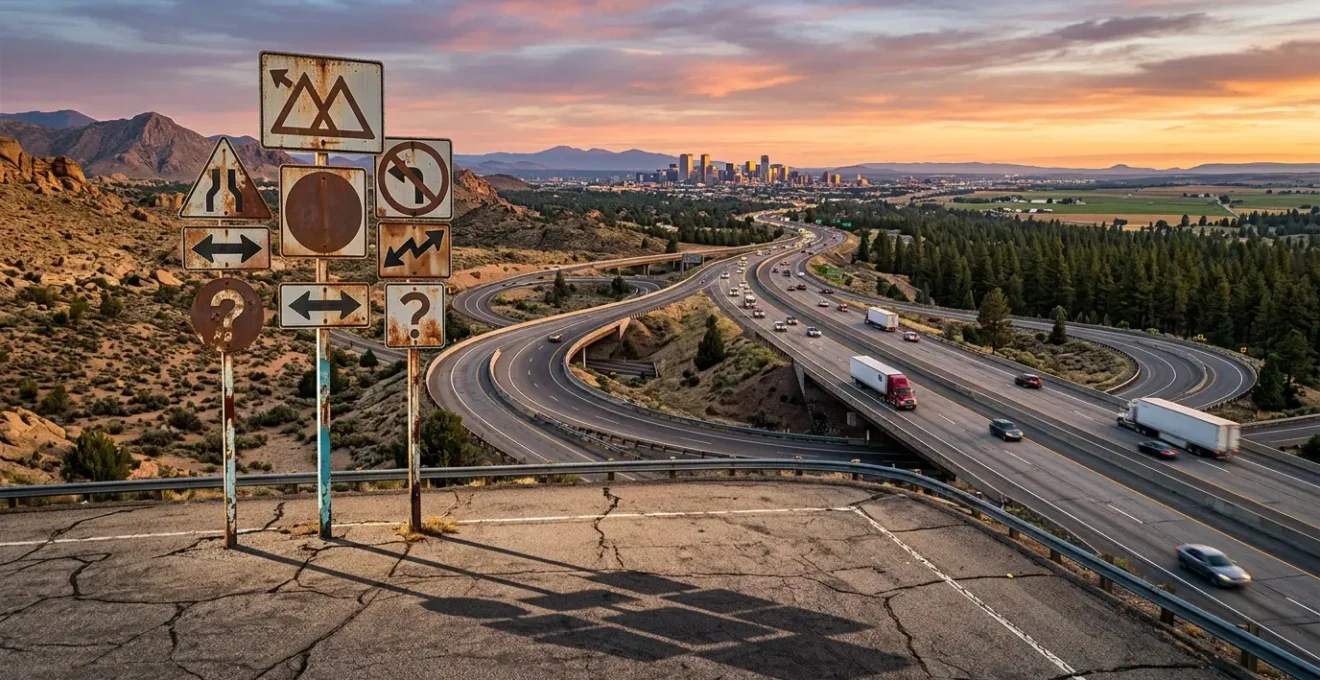
The United States is not one country; it’s 50 legally distinct territories, and crossing a state line can instantly change your rights and obligations.
- Your UK rental car agreement might be voided simply by driving into a neighbouring state.
- An act as simple as drinking a beer or using your phone while driving can shift from legal to a criminal offence in minutes.
- The price you see on a tag is almost never the price you pay, due to complex and varied sales taxes.
Recommendation: Treat every US state border as an international crossing. You must proactively research and adapt to local laws to avoid fines, voided insurance, and serious legal trouble.
For many UK tourists, the American road trip is the stuff of legend. The idea of driving from the canyons of Arizona to the coast of California seems like a seamless adventure. However, this dream often overlooks a critical reality: the United States is not one country with 50 regions, but 50 individual legal and cultural systems masquerading as a single nation. For a British traveller, this creates a minefield of potential problems.
Most travel advice simply tells you to “research before you go,” but this is unhelpful. What it fails to explain is that your legal status, financial obligations, and even personal safety can change dramatically the moment you cross an invisible state line. This isn’t about simply adjusting to driving on the right; it’s about understanding that the fundamental rules of society can be rewritten from one mile to the next.
The key isn’t just knowing the laws are different; it’s about learning to see these invisible borders and understanding the real-world consequences of crossing them. This guide moves beyond generic tips to provide a practical framework for UK drivers and tourists. It’s written from the perspective of an expat who has seen firsthand how easily a dream holiday can turn into a legal nightmare. We will dissect the most common and costly mistakes, from alcohol consumption and traffic violations to rental car contracts and the perplexing “price tag illusion.”
This article provides a comprehensive overview of the crucial legal and cultural differences you will encounter when travelling across the United States. To help you navigate these complexities, we have structured the information into key areas of concern for any UK visitor.
Summary: Why Ignoring US Regional Variances Can Result in Unexpected Legal Trouble for Tourists?
- The Alcohol Consumption Error That Violates Strict Local State Laws
- How to Research Specific State Traffic Regulations Before Hiring a Rental Car?
- State Laws or Federal Laws: Which Regulations Apply When Crossing American Borders?
- Why Assuming Uniform Sales Tax Across the US Destroys Your Shopping Budget?
- How to Adapt Your Behaviour Quickly When Moving from Liberal to Conservative States?
- The State Border Crossing Mistake That Voids Many UK Rental Car Agreements
- How to Navigate Complex US Tipping Culture Without Feeling Constantly Cheated?
- How to Plan a Seamless Journey Through Multiple US States Without Exhaustion?
The Alcohol Consumption Error That Violates Strict Local State Laws
One of the most jarring realities for UK visitors is America’s puritanical and deeply fragmented relationship with alcohol. Unlike in the UK, where drinking laws are uniform, in the US they can change town by town. A significant portion of the country operates under “dry county” laws, where the sale of alcohol is partially or completely banned. According to the National Alcohol Beverage Control Association, nearly 10% of US territory comprises dry counties, affecting 18 million people. Driving through one of these areas with an open container of alcohol—even if you’re just a passenger—can lead to immediate fines.
The logic is often baffling. A prime example is Moore County, Tennessee. It is famously home to the Jack Daniel’s distillery, one of the world’s most recognised whiskey producers. Yet, because it is a dry county, it is illegal to purchase a bottle of Jack Daniel’s in local stores or order it in a restaurant. The distillery itself can only sell commemorative bottles on-site due to a specific legal loophole. This “jurisdictional jigsaw” means you cannot assume that because you can buy alcohol in one town, the same rules will apply ten miles down the road.
For the UK tourist, the practical takeaway is one of extreme caution. Never have an open container of alcohol inside the passenger cabin of your car, even if it’s just a half-empty bottle of wine from a picnic. Store all alcohol, sealed and unopened, in the boot (trunk) of the vehicle. This simple habit can prevent a difficult and expensive encounter with local law enforcement, who will not be sympathetic to your ignorance of their specific local ordinance.
How to Research Specific State Traffic Regulations Before Hiring a Rental Car?
Assuming that traffic laws are consistent across the US is a recipe for disaster. While some rules are universal, many critical regulations change at the state line. Before you even get behind the wheel of a rental car, you must research the specific laws of every state you plan to drive in. Failure to do so can result in hefty fines, points on your license that can be reported back to the DVLA, or even the immediate termination of your journey.
A crucial area to check is hands-free laws. While it’s ill-advised anywhere, the legality of holding a phone while driving varies wildly. Some states have a complete ban, while others only prohibit texting. Another classic trap is the “right turn on red” rule. In most of the US, it is legal to turn right at a red light after a complete stop, unless a sign says otherwise. However, in New York City, this practice is banned by default. Making this turn in Manhattan will earn you a ticket.
Furthermore, consider logistical elements like toll roads. The US does not have a single, unified system. The Northeast uses E-ZPass, Florida has SunPass, and California uses FasTrak. These systems are often incompatible, and rental car companies charge exorbitant fees for using their transponders. Finally, all 50 states have “Move Over” laws, which require you to slow down and, if possible, change lanes when you see emergency vehicles with flashing lights on the roadside. The penalties for ignoring this are severe, as it is a major cause of death for police officers and first responders.
State Laws or Federal Laws: Which Regulations Apply When Crossing American Borders?
For UK visitors, one of the most confusing aspects of the US legal system is the constant interplay between state and federal law. As a tourist, you are subject to both simultaneously, and which one takes precedence depends entirely on where you are standing. The official advice from the British government is unambiguous. As the GOV.UK USA Travel Advice page states, “US states may have different laws. While you are in a state, you are subject to both that state’s laws as well as national (federal) law.”
This creates situations that can be dangerously counter-intuitive. For example, several states like California and Colorado have legalised the recreational use of cannabis. A tourist might purchase it legally in a state-licensed shop. However, cannabis remains illegal under federal law. The moment you drive with that legally purchased product into a National Park (which is federal land), you have committed a federal crime. The same applies to crossing a state line; transporting the substance from one legal state to another is federal drug trafficking.
This dual-jurisdiction system applies to many areas that affect tourists. Driving on a state highway subjects you to that state’s traffic laws, but entering a military base or a federal courthouse puts you squarely under stricter federal regulations. This distinction is not academic; it has profound practical implications for your rights and the severity of potential penalties.
This table illustrates the critical jurisdictional shifts that can catch tourists unaware. As shown by a guide on federal versus state jurisdictions, understanding where state authority ends and federal authority begins is essential.
| Location Type | Primary Jurisdiction | Key Implications for Tourists |
|---|---|---|
| State Highways | State Law | Traffic rules, speed limits vary by state |
| National Parks | Federal Law | State-legal cannabis becomes federal crime |
| State Borders | Federal Law | Interstate transport of substances prohibited |
| Military Bases | Federal Law | Stricter penalties, federal prosecution |
Why Assuming Uniform Sales Tax Across the US Destroys Your Shopping Budget?
UK visitors accustomed to the UK’s VAT system, where the price on the label is the final price, are often shocked by the American system. In the US, the price displayed on a product shelf or menu is almost never what you will actually pay. Sales tax is added at the checkout, a phenomenon that can be called the “price tag illusion.” This isn’t a small amount; according to a tourism guide from TripAdvisor, sales tax can add up to 10% to the displayed price, significantly impacting your holiday budget if you aren’t prepared.
The reason for this confusing system is that sales tax is not a single national tax. It is a complex patchwork of state, county, city, and even special district taxes. A shop in one part of a city might have a slightly different total tax rate than a shop a few miles away. This complexity makes it impractical for retailers to include the tax in the shelf price. For a tourist, this means a $100 item could cost you $107.50 in Los Angeles or $108.88 in Chicago, while in Portland, Oregon, it would cost exactly $100 because Oregon has no state sales tax.
Five states—Oregon, Montana, Delaware, New Hampshire, and Alaska—have no statewide sales tax, making them popular shopping destinations. However, even this has caveats, as some municipalities in Alaska can add their own local tax. To complicate matters further, the rules for what is taxed vary. Many states exempt groceries (unprepared food), but will then tax prepared or hot foods at a higher rate. This means a sandwich from a deli counter might be taxed, while the bread and ham to make it yourself are not. You must budget for an extra 8-10% on all non-essential purchases to avoid a nasty surprise at the end of your trip.
How to Adapt Your Behaviour Quickly When Moving from Liberal to Conservative States?
Beyond formal laws, the US exhibits a profound “cultural whiplash” when travelling between its liberal and conservative regions. The social norms, acceptable behaviours, and even the level of personal safety for certain groups can change drastically over a few hundred miles. This is not about politics; it is about practical travel safety and awareness. What is celebrated in a coastal city like San Francisco might be met with hostility in a small rural town in a different state.
This is particularly critical for LGBTQ+ travellers. While the US has federal marriage equality, the lived experience can vary enormously. The official travel advisory from the Canadian government, for instance, specifically warns its citizens that some US states have enacted laws and policies that may affect LGBTQ+ persons, advising them to check local laws. This is a diplomatic way of saying that legal protections and social attitudes are not uniform. A public display of affection that would be unremarkable in New York City could attract unwanted and potentially dangerous attention in a less tolerant area.
The key for any tourist, especially those from minority groups, is situational awareness. Before entering a new state, it is wise to do a quick search on its general social climate. This isn’t about being paranoid; it’s about being prepared. It might mean being more discreet in certain areas or choosing to spend your time and money in more welcoming communities. The stark contrast between urban and rural America, or between “blue” (liberal) and “red” (conservative) states, is a defining feature of the country that you must navigate with care and intelligence.
The State Border Crossing Mistake That Voids Many UK Rental Car Agreements
For UK drivers, a rental car is the key to unlocking America. However, hidden in the fine print of your rental agreement is a clause that can turn your dream road trip into a nightmare. Many rental contracts restrict which states you are allowed to drive the vehicle in. Taking the car across a state line not listed in your “Authorized States” list can instantly void your insurance coverage, particularly your Loss Damage Waiver (LDW) or Collision Damage Waiver (CDW).
This means if you have an accident in an unauthorized state, you could be held personally liable for the full value of the vehicle and any third-party damages. As the legal experts at Leigh Day law firm warn in a briefing on US travel laws, “It’s important to note US travel rules change from state to state, so if you are picking up your car in one state but driving through another, make sure you are familiar with that state’s rules too.” This applies directly to your contract with the rental company. Don’t assume that because you rented a car in Nevada for a trip to Las Vegas, you are automatically covered to drive it to the Grand Canyon in Arizona.
Rental companies often use GPS tracking and can detect when a vehicle has been taken into an unauthorized state. Before you leave the rental desk, you must explicitly state your full itinerary and ensure all states are listed on your contract. If they are not, you must get written permission. This simple check is one of the most important things you can do to protect yourself financially.
Action Plan: Your Rental Agreement Border Crossing Checklist
- Check the ‘Authorized States’ list in your rental contract before signing it.
- Verify if crossing into Canada or Mexico voids your coverage entirely, as this is a common exclusion.
- Ask about GPS tracking and be aware that rental companies can detect unauthorized state entries.
- Confirm whether any unpaved road restrictions apply, a common clause in Southwest states like Arizona and Utah.
- Register all potential drivers at the rental desk; an unauthorized driver behind the wheel will always void your insurance.
How to Navigate Complex US Tipping Culture Without Feeling Constantly Cheated?
Tipping culture in the US is a source of constant anxiety for British tourists. It can feel arbitrary, confusing, and like you’re constantly being pressured for more money. The key to navigating it is to reframe your thinking: tipping is not a bonus for good service; it is a fundamental part of the service worker’s wage. As TripAdvisor emphasizes, many US service workers rely on tips to make a living wage, as the federal minimum wage for tipped employees can be incredibly low.
This “social contract of tipping” means that not tipping, or tipping below the standard 15-20%, is not seen as you making a statement about service quality. It is seen as you depriving someone of their expected income. While it may feel uncomfortable, you must factor tips into your budget as a mandatory cost of the service. A simple rule is to double the sales tax on your bill, which will usually get you close to a 20% tip.
The standard rates vary by service, and it’s essential to know them to avoid awkwardness. The expectation is clear and rigid, and following it will make your interactions much smoother. Resisting it will only cause stress for you and financial harm to the people serving you. It’s a system you may not agree with, but it’s one you must participate in while you are a guest in the country.
This table provides a general guide to standard tipping practices in the US. Following these guidelines is the best way to navigate the system without causing offense.
| Service Type | Standard Tip | Notes |
|---|---|---|
| Restaurant Server | 15-20% pre-tax | Calculate on subtotal before tax |
| Bartender | $1-2 per drink | Or 15-20% of tab |
| Hotel Housekeeping | $2-5 per day | Leave daily, not at checkout |
| Bellhop | $1-2 per bag | Both arrival and departure |
| Valet Parking | $2-5 | When car is returned |
| Taxi/Uber | 15-20% | Round up for short rides |
Key takeaways
- US state lines function as undeclared legal borders where laws on traffic, alcohol, and taxes can change instantly.
- Your UK rental car agreement contains strict geographical limitations; crossing into an unauthorized state can void your insurance.
- Federal law always supersedes state law in specific zones like National Parks, airports, and at state borders, creating legal traps for the unwary.
How to Plan a Seamless Journey Through Multiple US States Without Exhaustion?
Successfully navigating a multi-state US road trip requires more than just a good playlist; it demands strategic planning that accounts for the country’s vast scale and hidden complexities. A common mistake is to trust GPS driving estimates blindly. The sheer size of the country and factors like traffic, construction, and time zone changes mean you must build in significant buffers. Tourism professionals often recommend adding a 25-30% buffer to any GPS estimate for a long-distance drive.
One of the most underestimated factors is fatigue from crossing time zones. This particularly affects east-west routes. Driving from Chicago (Central Time) to New York (Eastern Time) means you “lose” an hour, leading to subtle but cumulative fatigue. A smart plan involves scheduling shorter driving days when you know a time zone crossing is imminent. It’s also vital to re-think the purpose of stops. Instead of just pulling over for petrol, pre-identify points of interest—a small museum, a scenic overlook, a local cafe—to use as your rest breaks. This transforms a gruelling drive into a part of the adventure.
Finally, embrace the “Two-Night Rule.” Constant packing and unpacking is exhausting. For any trip longer than a week, plan to stay at least two nights in one location every three or four days. This provides a crucial reset day where you can do laundry, properly explore a local area, or simply rest. A seamless journey is not about driving the fastest; it’s about planning in a way that manages energy, anticipates logistical hurdles, and allows for the spontaneous discovery that makes a road trip memorable.
By adopting a mindset that treats every state line as a new legal and cultural frontier, you can transform your American road trip from a potential minefield into the incredible, seamless adventure you’ve always dreamed of. Plan accordingly, drive safely, and embrace the diversity of the 50 different countries you’re about to visit.
Frequently Asked Questions About US Regional Variances
Which states have no sales tax at all?
Five states have zero sales tax: Oregon, Montana, Delaware, New Hampshire, and Alaska (though some Alaska municipalities add local tax).
Why isn’t tax included in displayed prices?
Unlike VAT in Europe, US sales tax is added at checkout because rates vary by state, county, city, and special districts.
Are groceries taxed everywhere?
No, many states exempt unprepared food, but prepared/hot foods are often taxed at higher rates even in tax-free grocery states.